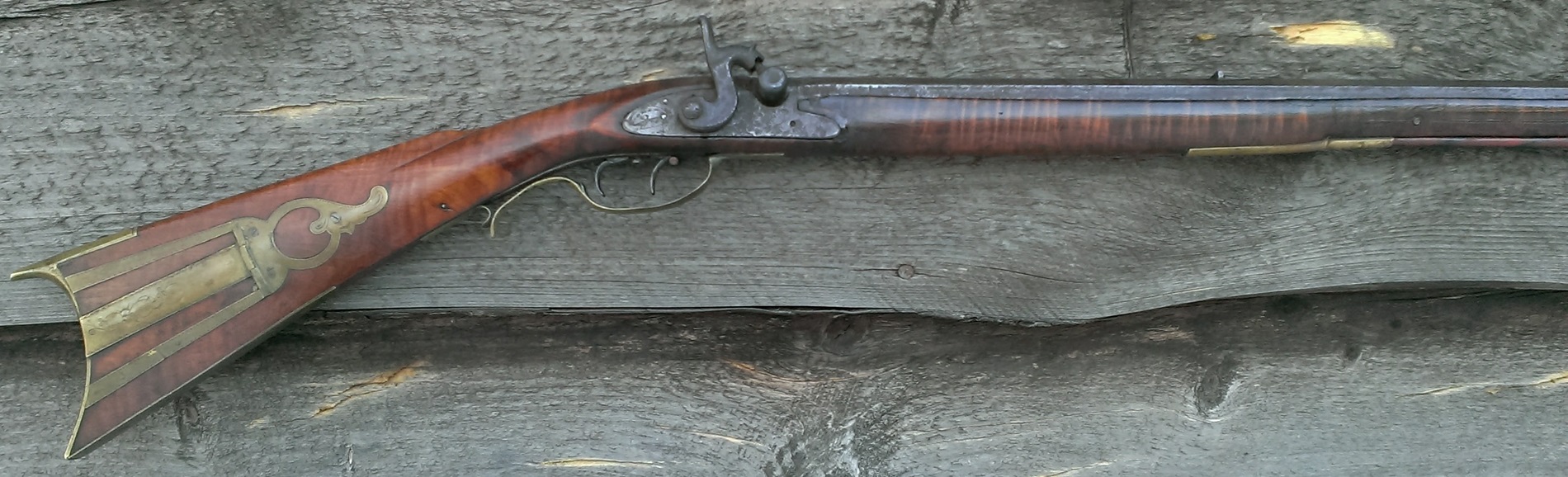
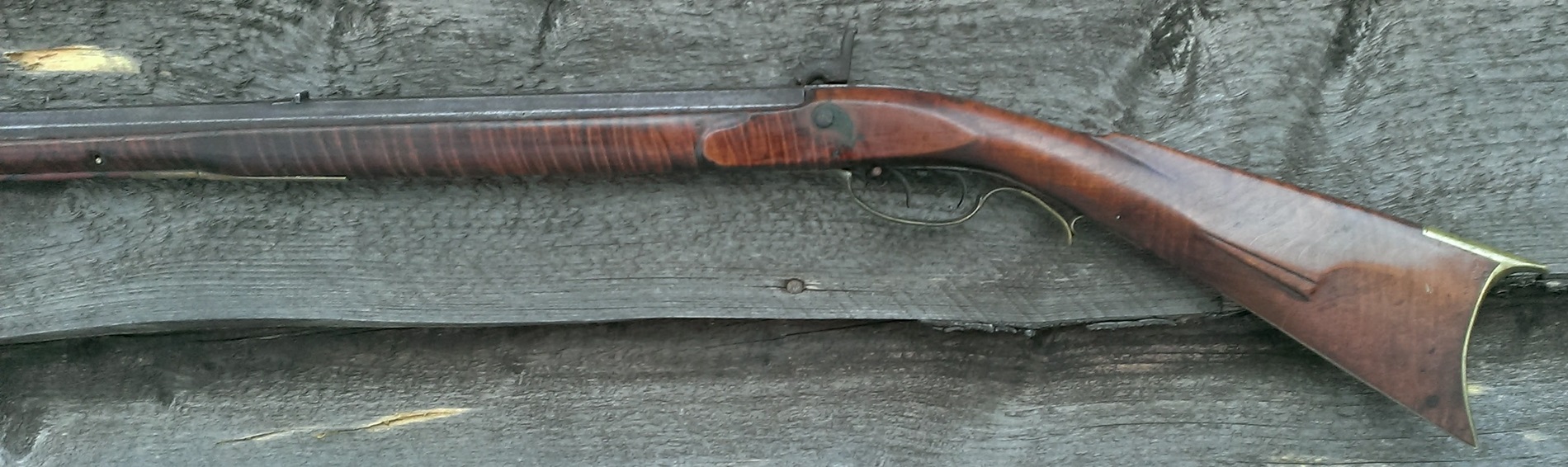
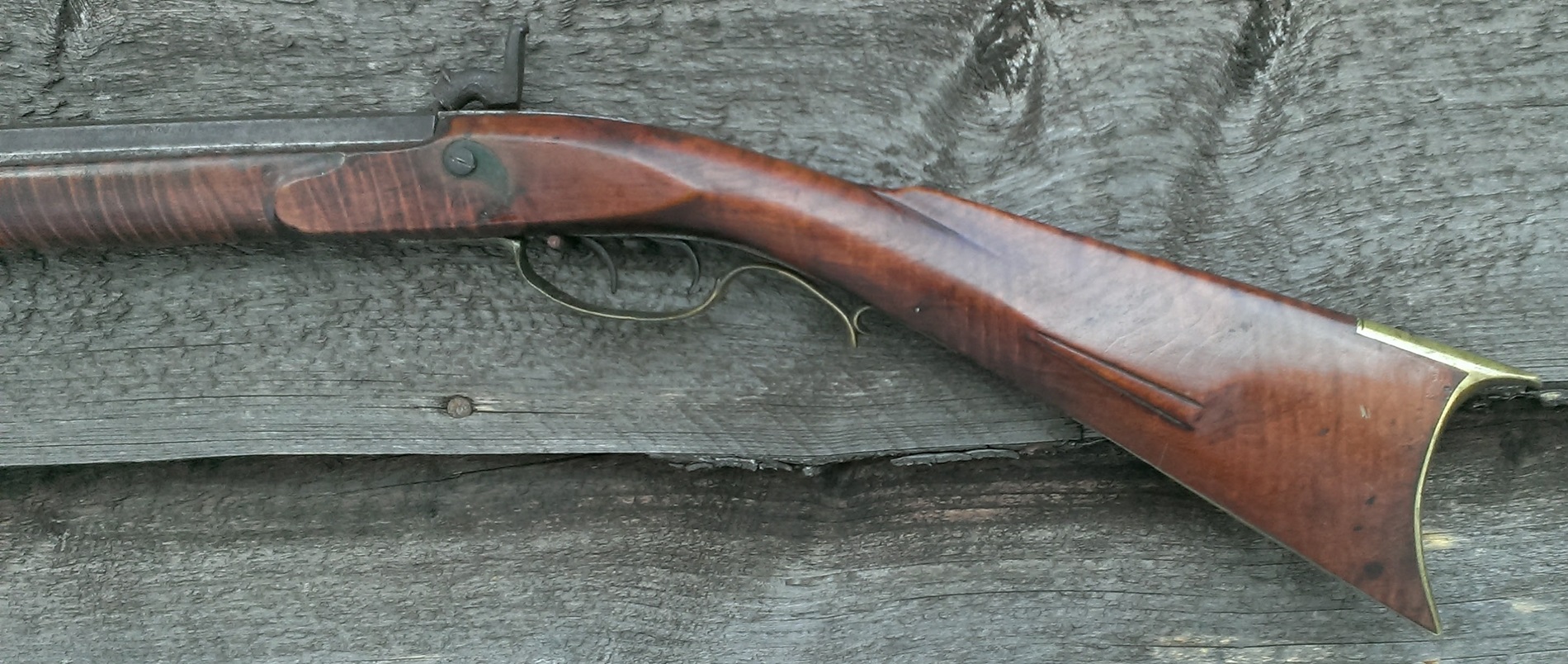
The photos on this page were provided by Stephen Miller of BV Colonial Crafts. They show a handsome, relatively plain full stock muzzle loading rifle. It was made and signed by the 19th century gunsmith Daniel Benjamin Troutman, who worked in Somerset and Bedford Counties, Pennsylvania and Franklin County, Kansas. On a computer, you can make the photos smaller by reducing the width of the window.
This page is part of an online project that features the old-time guns and gunsmiths of Bedford and Somerset counties, Pennsylvania.
L. Dietle

Photos
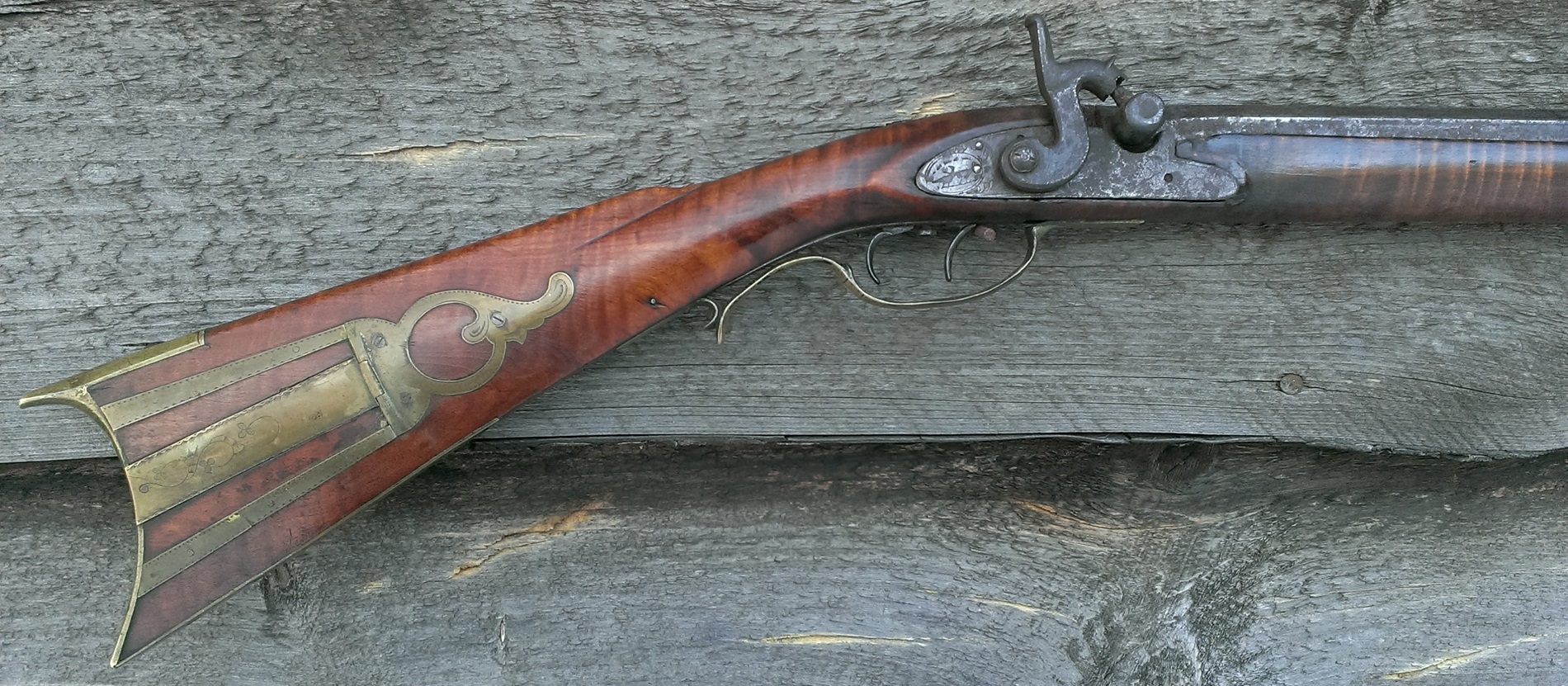
The next photo provides a larger view of the right-hand side, from the butt plate to just forward of the ramrod entry pipe.
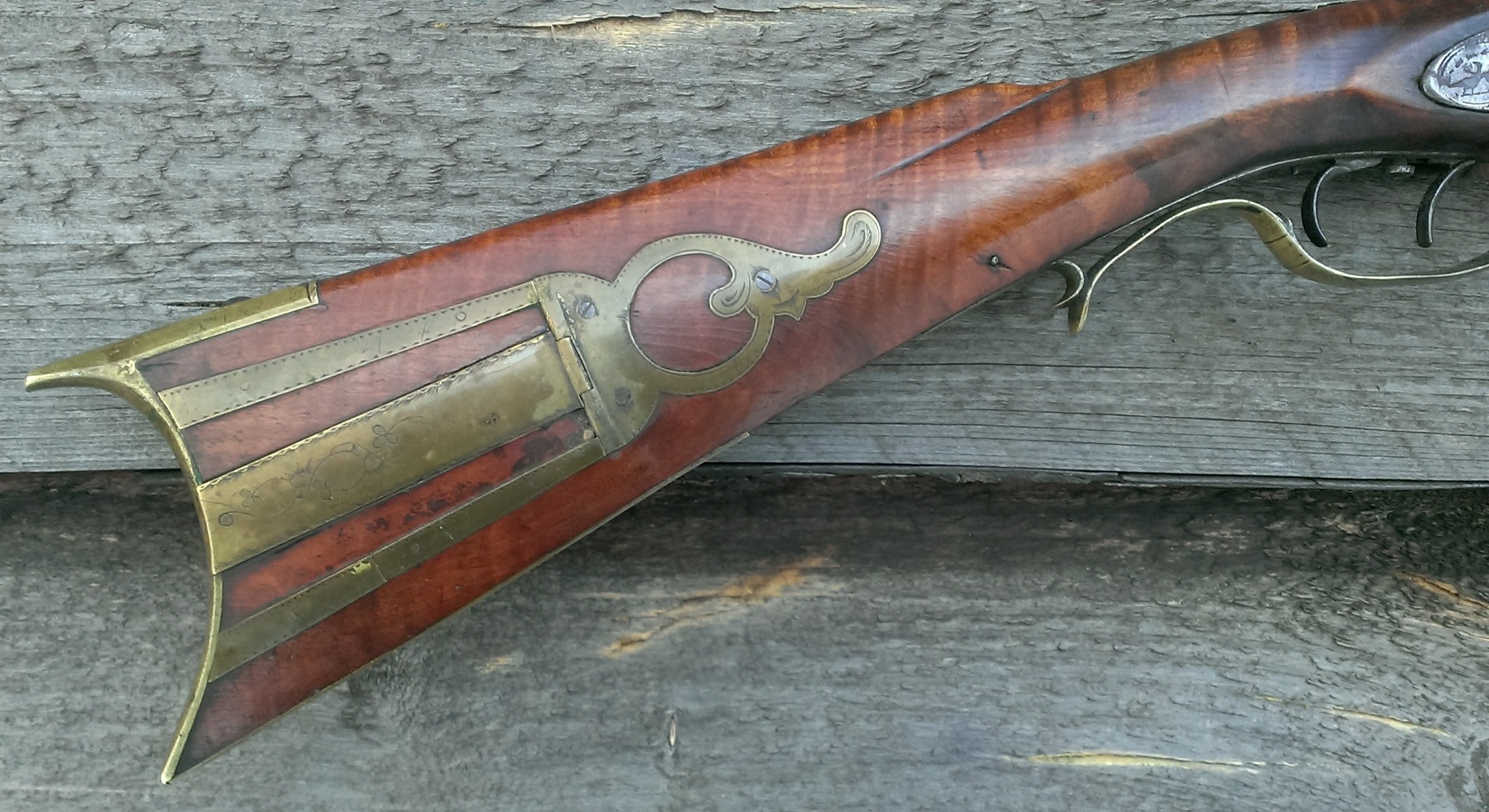
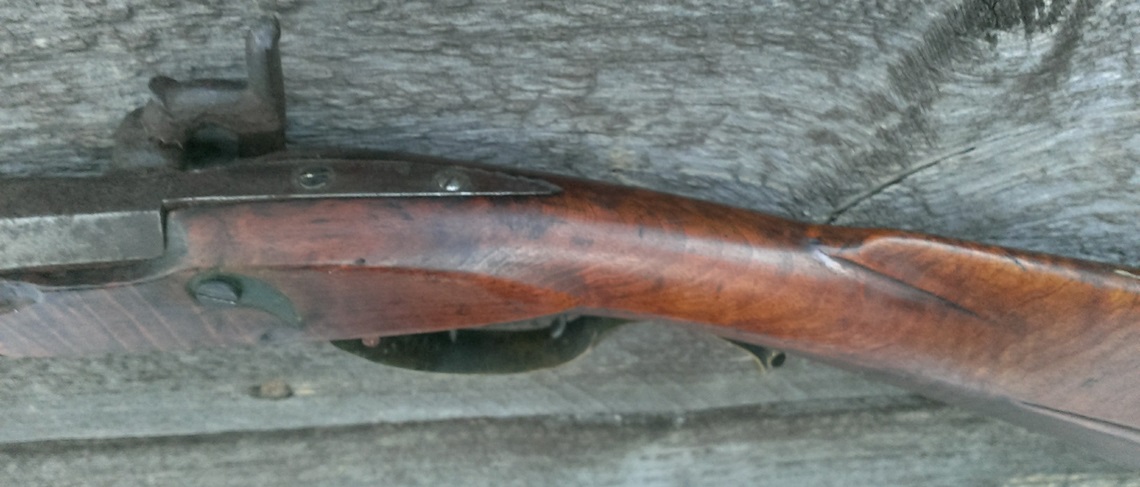
I like this old gun so much that I provided yet another view of its right-hand side, from the butt plate to just forward of the gun lock.
The next picture provides an overall view of the engraved four-piece patch box. The un-pierced side plates of the patch box are separated from the lid by exposed sections of the wooden stock. The widths of the side plates and the exposed sections of wood get gradually narrower from back to front, which is visually pleasing. The Q-shaped finial has a single piercing, and like a rifle signed by Daniel's father, the tail stroke extends to the interior of the "Q". The peripheral shapes of the finials on both rifles appear to be virtually identical. Miraculously, the extremely pointed toe of the stock is unbroken.
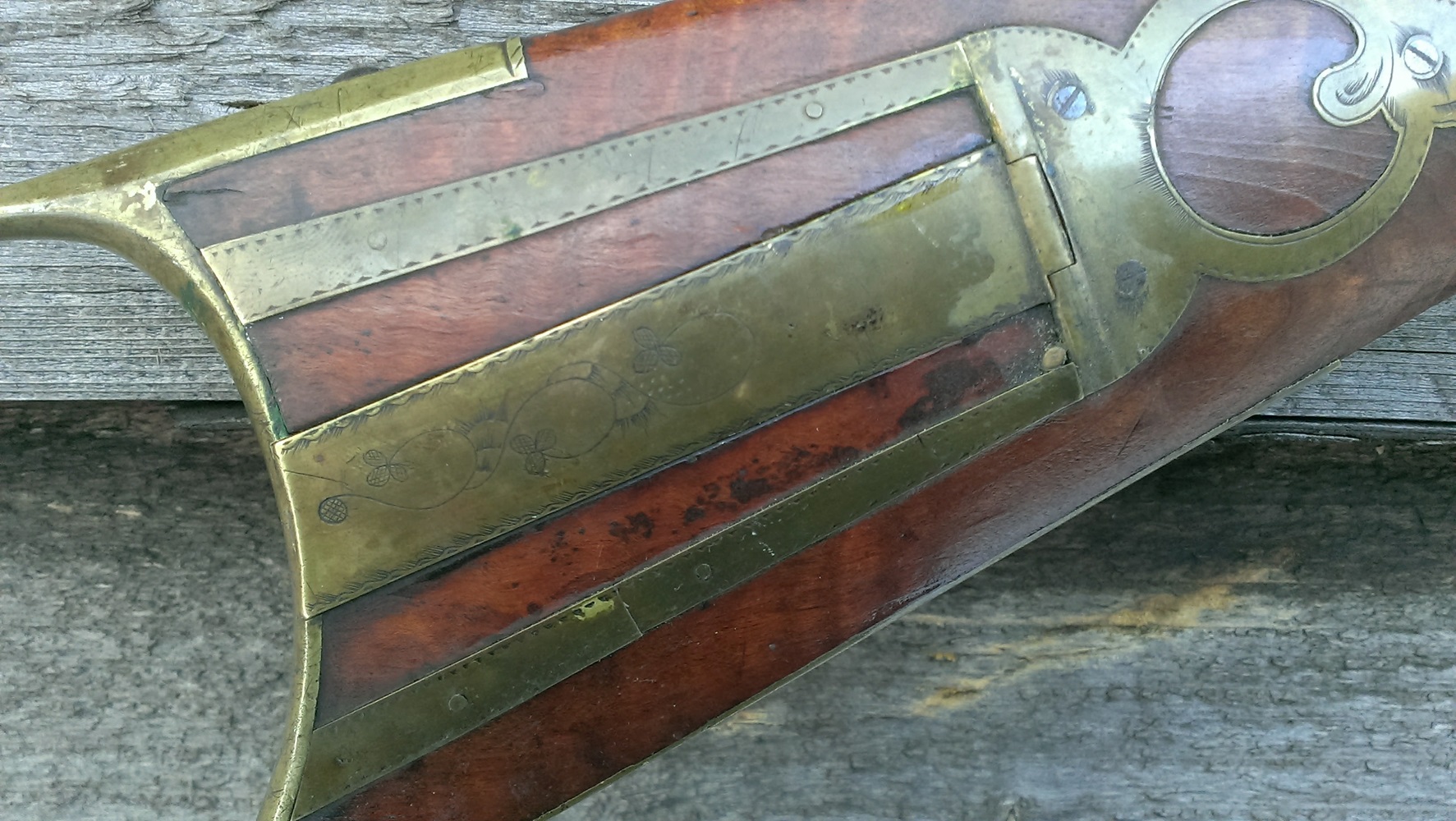
The following image is zoomed in to better-show the cloverleaf engraving on the lid of the patch box. The wavy pattern along the sides of the lid can be found on other Troutman rifles.
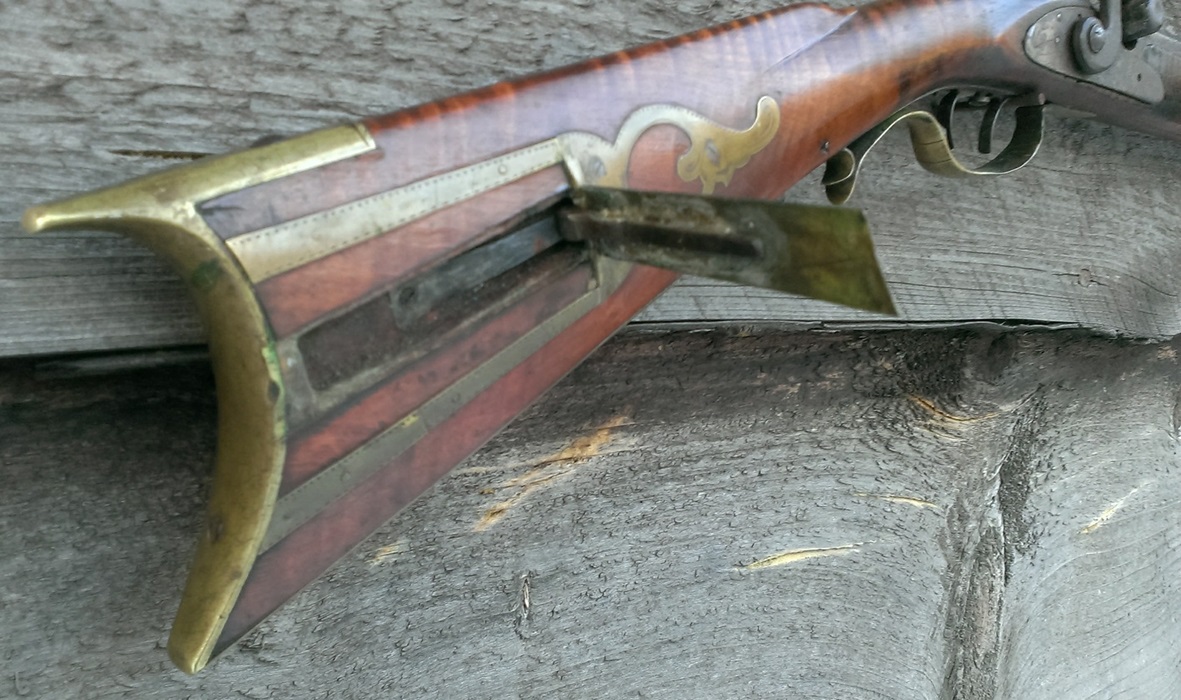
The following photograph is included to show the lid of the patch box in the open position. It appears that the lid is held in the open and closed positions by a cam that is mounted to the underside of the lid. Also notice the thumbnail notch on the right-hand side of the butt plate.
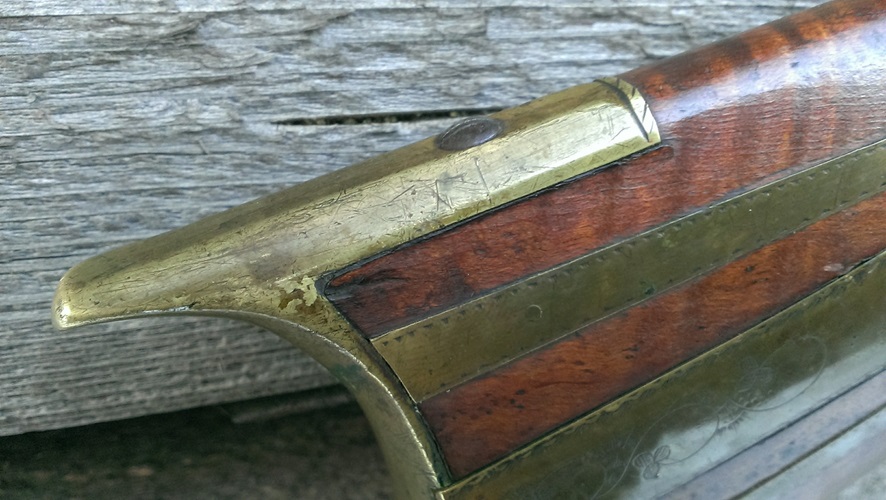
The following picture is included to provide an oblique view of the heel and top of the cast brass butt plate.
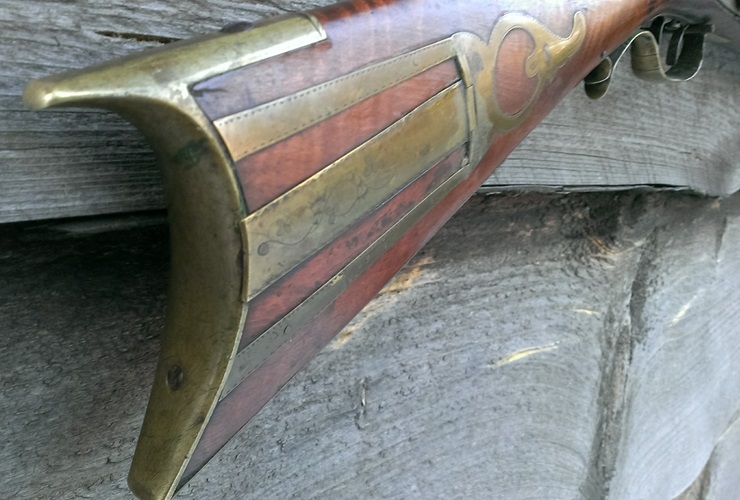
The following image is included to provide an oblique view of the crescent-shaped butt plate, with its thumbnail notch under the rear end of the lid of the patch box.
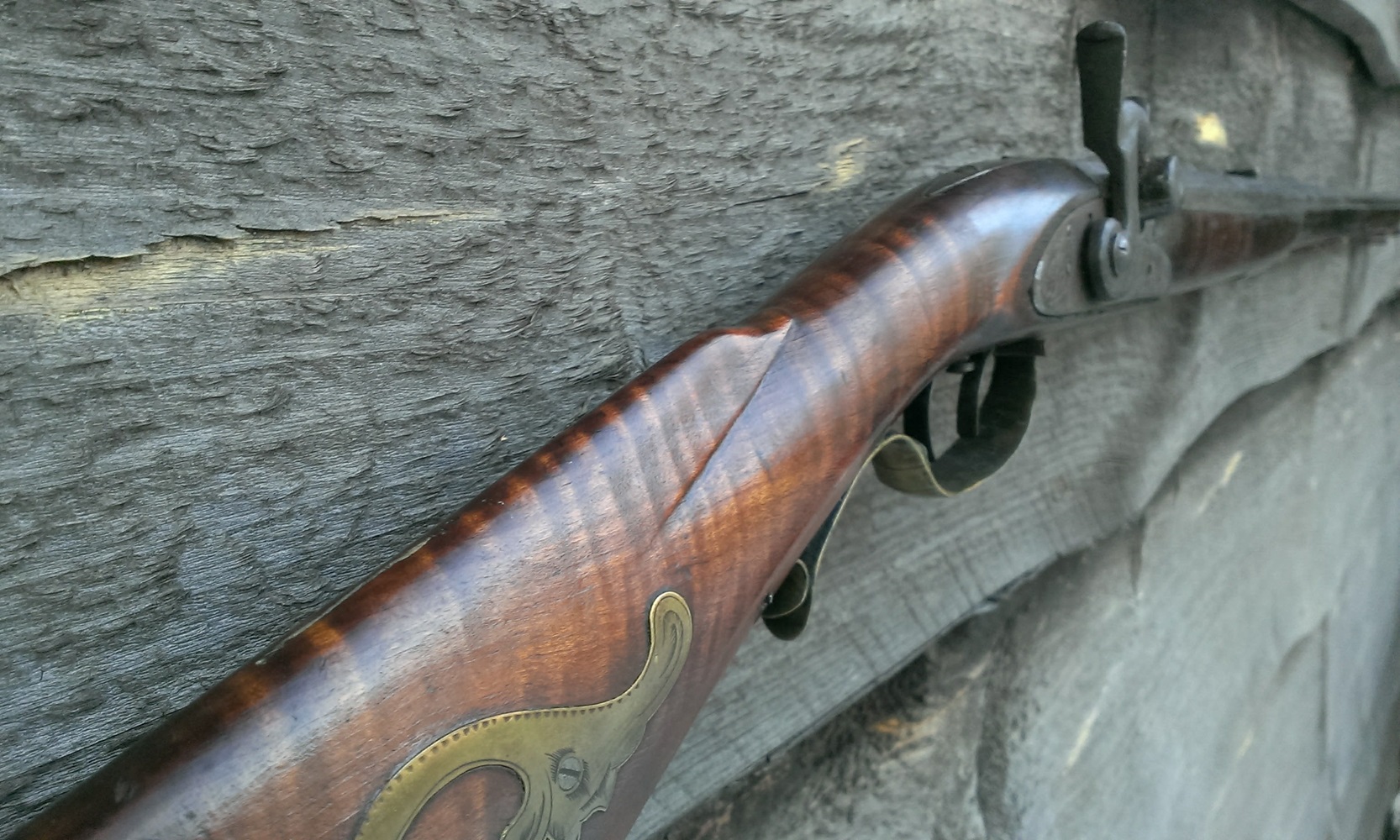
The next photo provides an oblique view of the forward end of the comb, at its juncture with the wrist of the stock. As can be seen here, this antique muzzleloader is stocked in curly maple.
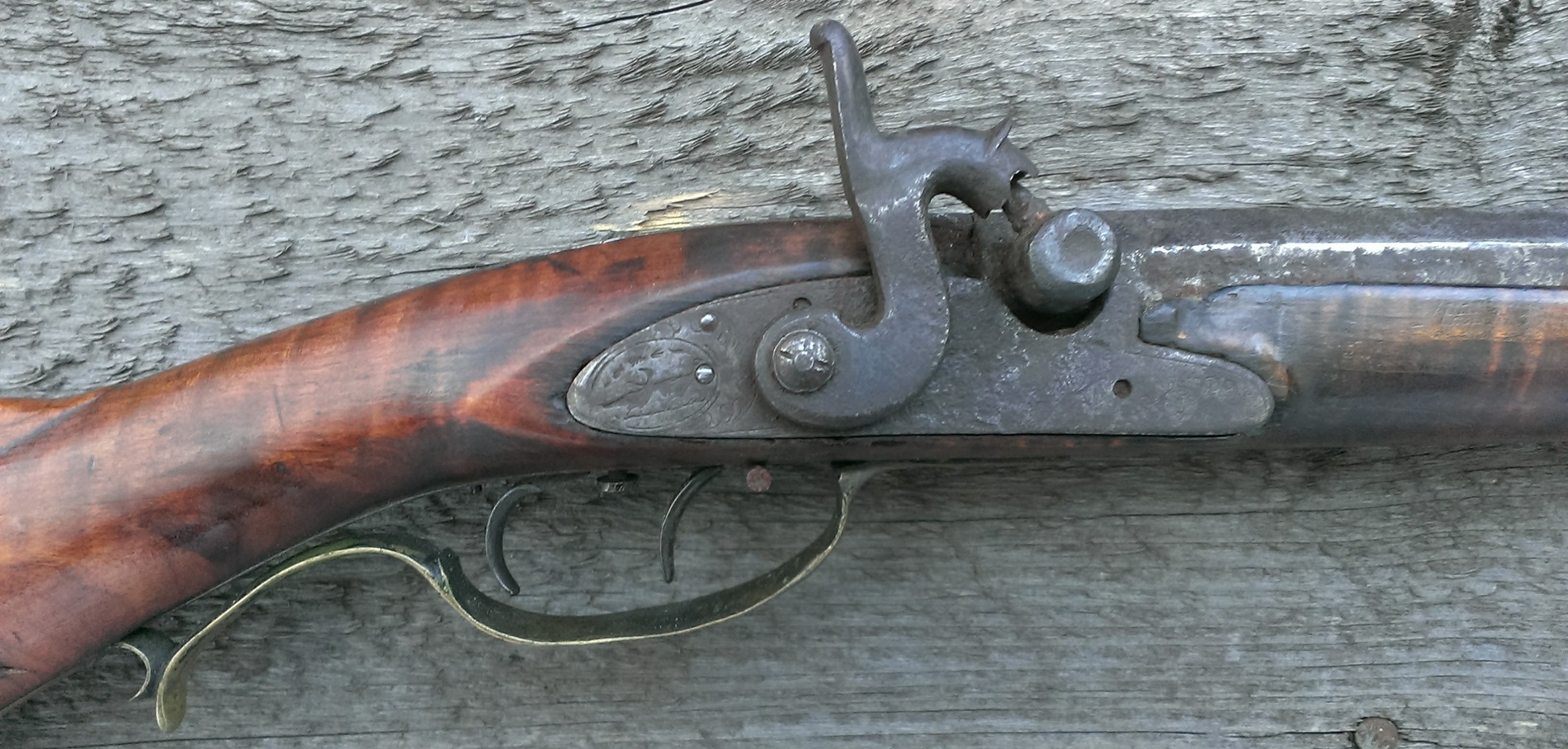
The next picture shows the commercially-procured percussion lock and the mating panel of the rifle stock. The tail of the lock plate is rounded. The recessed nose of the percussion hammer is well aligned with the nipple. The hammer appears to be retained by a slotted nut, rather than a screw. The drum does not incorporate a vent screw. The pointed tail of the lock panel of the stock adds to the aesthetic appeal of this muzzle loading rifle.
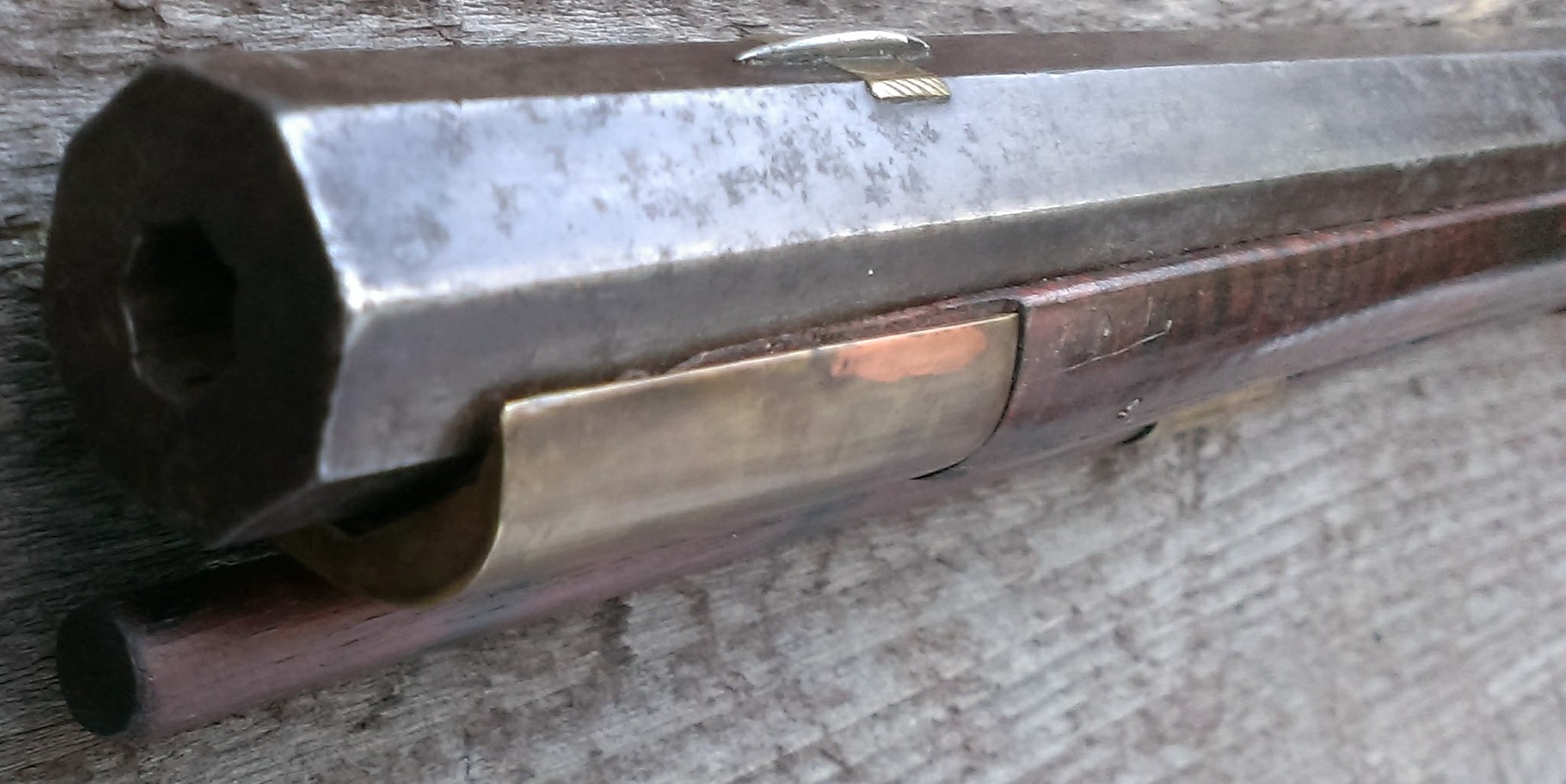
The following picture provides an oblique view of the pointed tang of the breech plug, which is secured with a pair of screws. Pointed tangs were commonly used by gun makers in Somerset and Bedford counties, Pennsylvania.
The next photograph shows the underside of the trigger guard.
The next photo provides an overall view of the right-hand side of the forearm. Two of the metal barrel-retention pins are clearly visible.
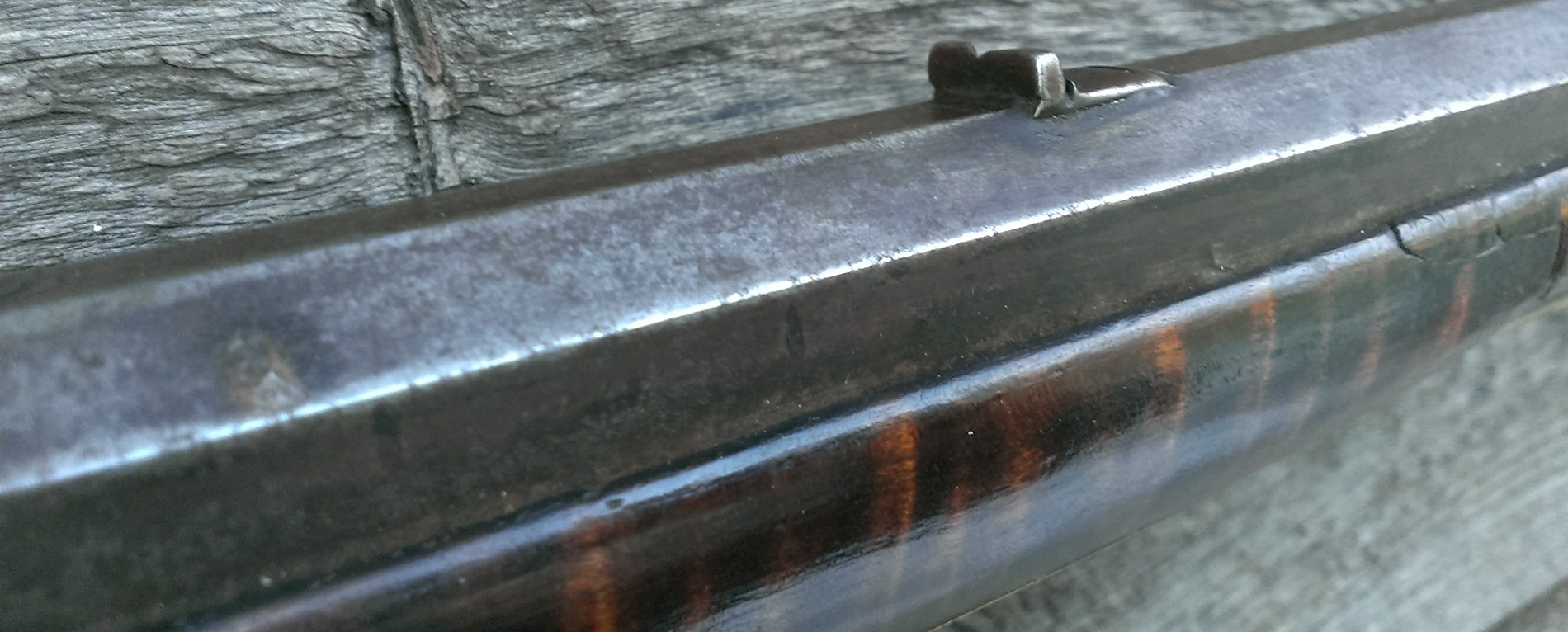
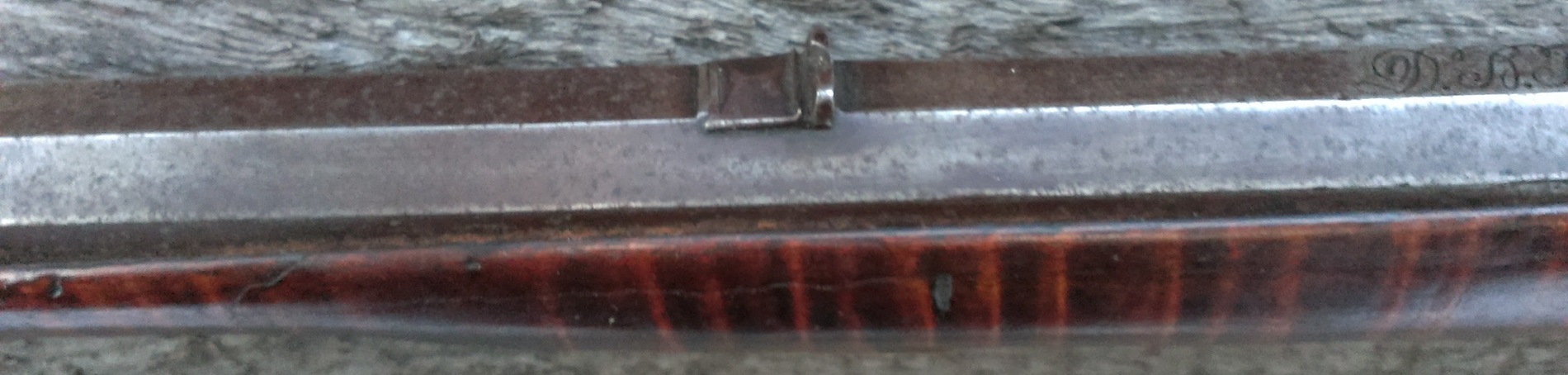
The next picture provides an oblique view of the rearward portion of the open back sight.
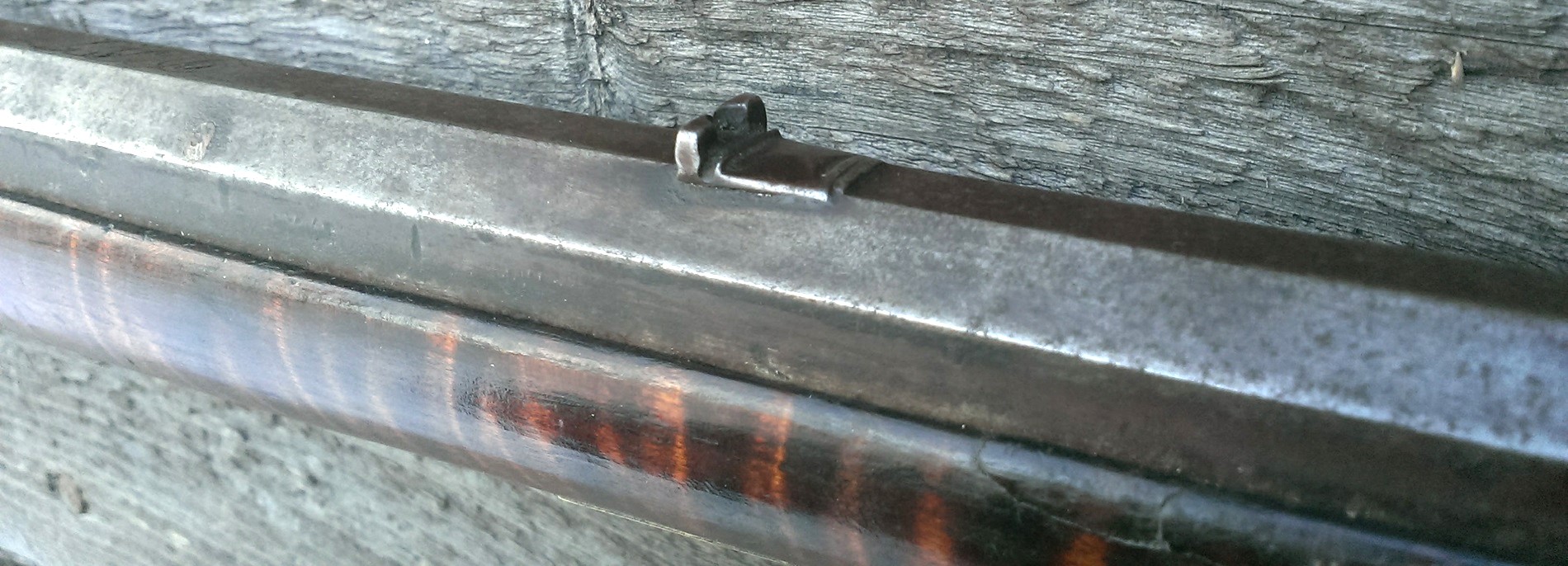
The next picture provides an oblique view of the forward portion of the back sight, to show the decorative file work.
The next photo provides a view of the underside of brass ramrod entry pipe. The ramrod appears to be painted and is artificially striped, and is most likely a replacement.
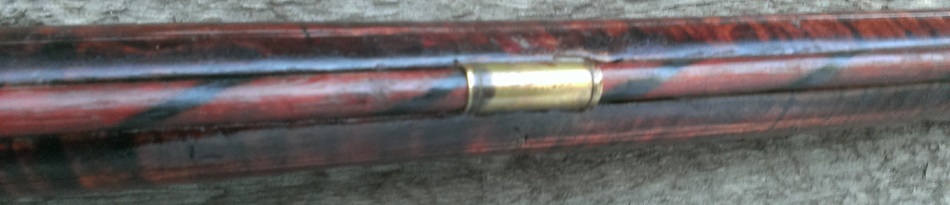
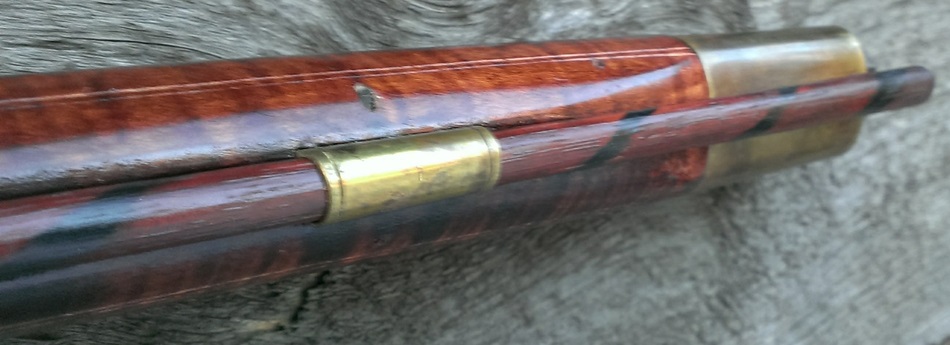
The next photo provides a view of the rear ramrod pipe, which is unfaceted.
The next photograph shows the forward ramrod pipe, the brass nose cap, decorative incised lines on the fore-end of the stock, and the fore-end transition from grooved to ungrooved. The photograph also shows transverse metal pin that retains the ramrod pipe to the fore-end of the stock.
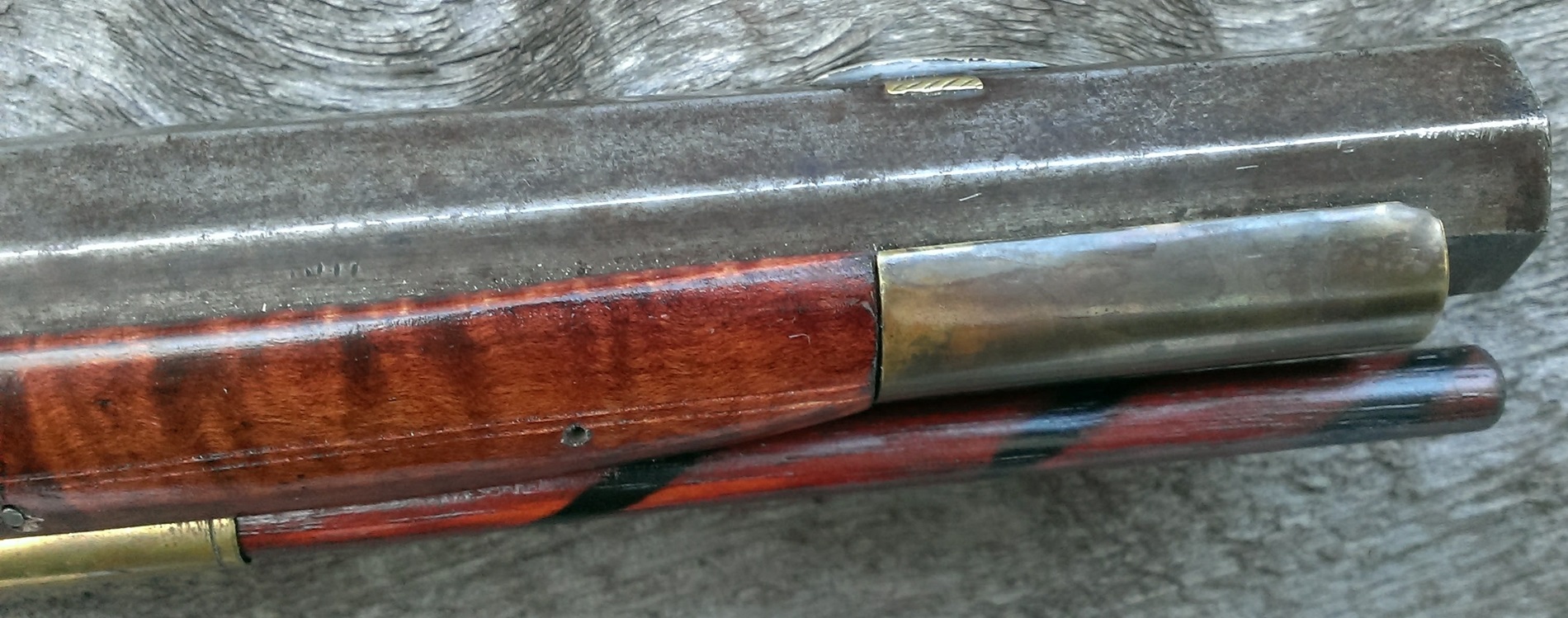
The next photograph shows the right-hand side of the un-grooved nose cap. Also note the parallel incised lines on the fore-end.
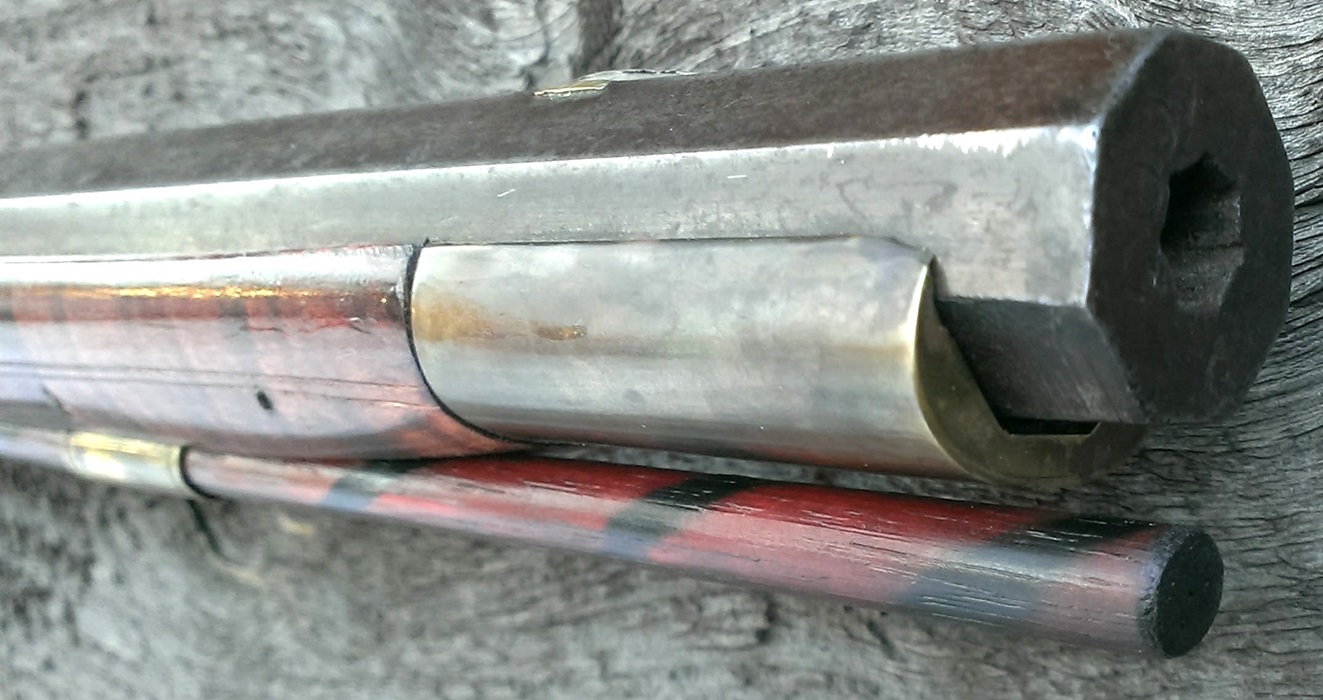
The next photo is a lightened version of the muzzle-portion of the preceding photo, to show the seven-groove cut rifling and the decorative circles on the forward end of the barrel.
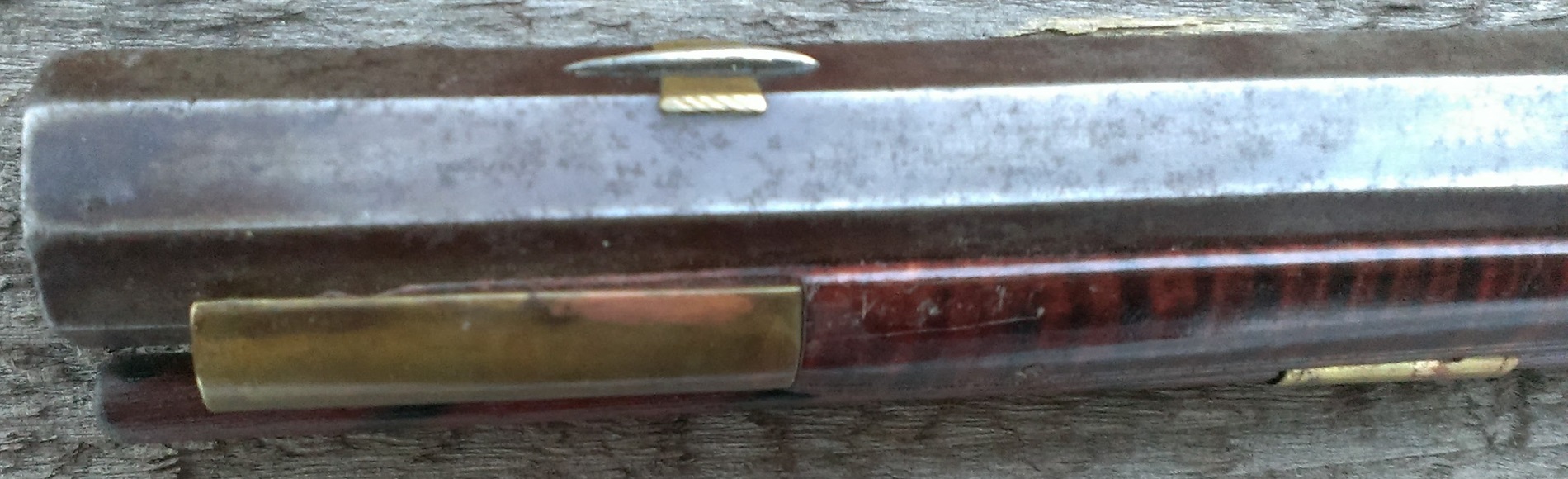
The next picture provides a view of the right-hand side of the dovetailed, blade-type front sight. The base of the sight is brass and the blade appears to be silver. The hole in the stock for the front barrel retention cross-pin is visible between the front ramrod pipe and the relatively long nose cap.
The next photograph provides an overall view of the left-hand side of this slender, aesthetically pleasing black powder "Kentucky rifle".
The following picture shows the rearward portion of the left-hand side of the rifle, from the butt plate to the ramrod entry pipe.
The next photo is zoomed in a little, and shows the left-hand side of the gun stock from just forward of the stock panel to the butt plate.
The next photo is zoomed in more, to better-show the cheekpiece side of the buttstock. The top line of the comb is straight, and is very well-aligned with the top of the butt plate, and the fit between the butt plate and stock is excellent. The belly of the stock is subtly and attractively curved. This photo also shows that the buttstock is fitted with a long toeplate. Also notice how the front of the cheekpiece blends into the wrist area of the stock.
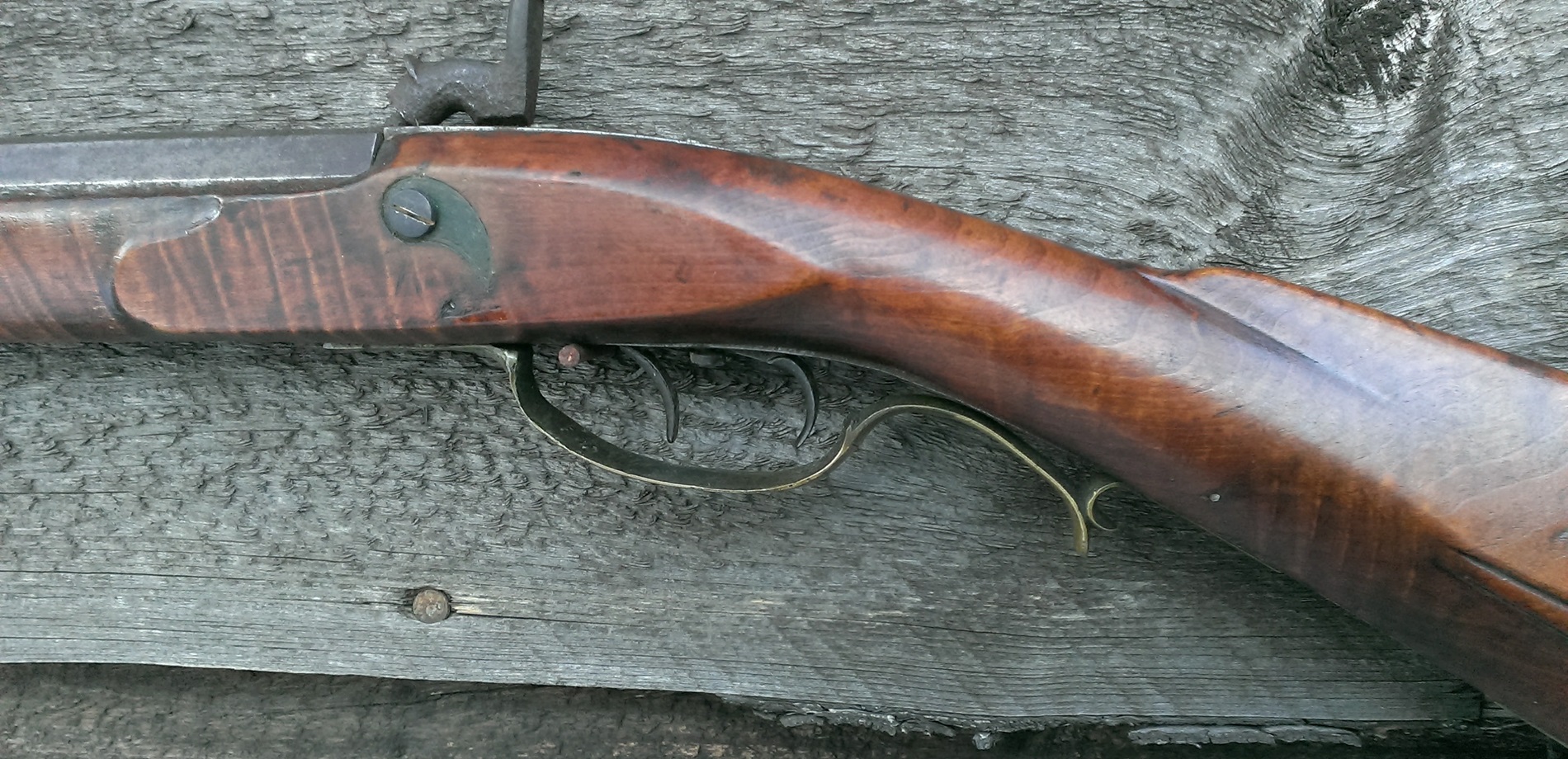
The next photo is provided to give a closeup look at the left-hand side of the cast brass trigger guard. The bow of the trigger guard houses a double set trigger arrangement. Both triggers are curved, and the trigger adjustment screw is visible between them. The ends of both of the metal pins that secure the trigger guard to the stock are visible.
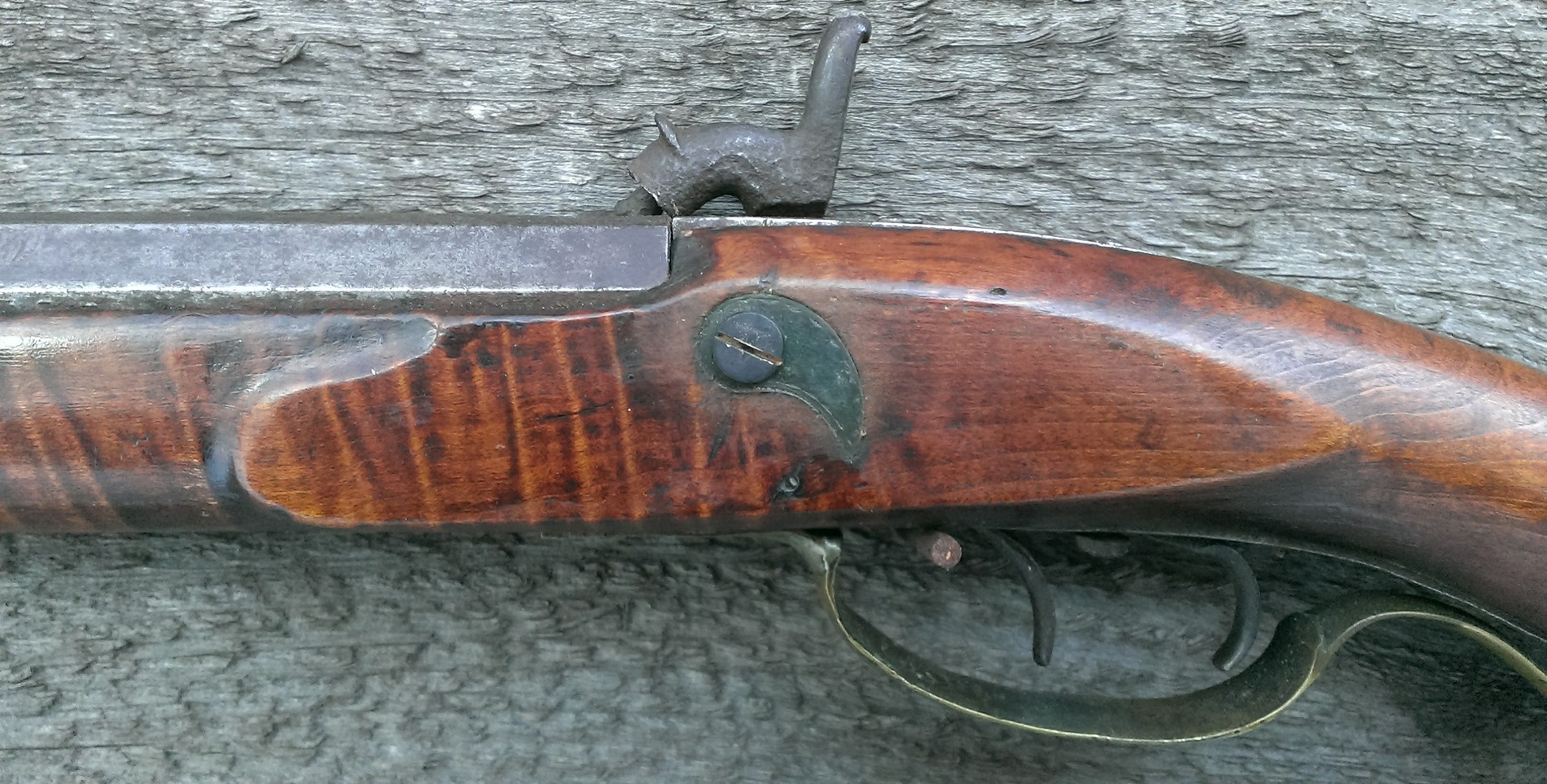
The next picture features the attractively-shaped panel on the left-hand side of the rifle stock. I love the wavy grain in the forward portion of the panel. The lock is retained by a single threaded fastener. The engraved lock bolt plate has an attractive curved teardrop shape. Rather than being completely recessed into the stock, part of the flank of the trigger plate is inadvertently exposed to view.
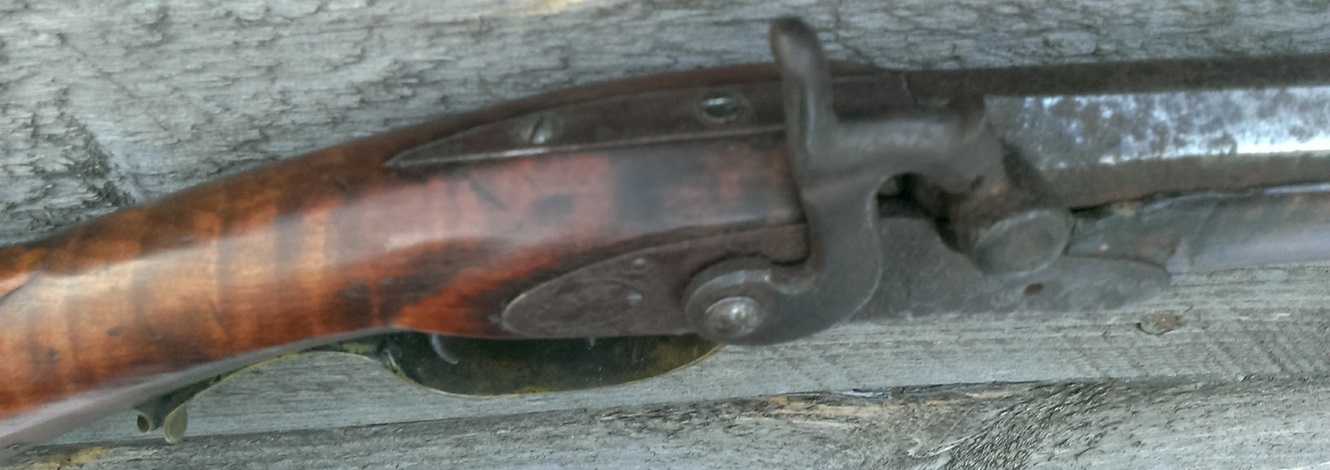
The next picture provides an oblique view of the forward end of the comb, the stock panel, and the tang of the breech plug. The stock is "scooped out" just behind the rearward end of the barrel — an interesting design element.
The next photo provides an oblique view of the rear sight, and also shows where the barrel inscription is located relative to the rear sight.
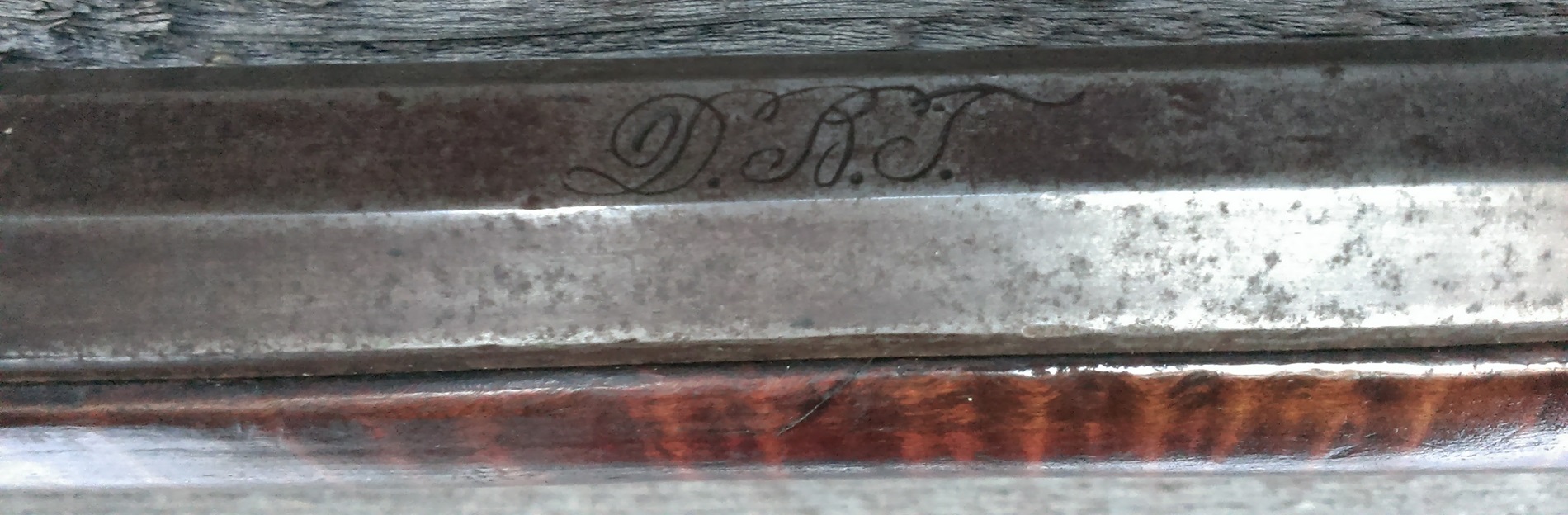
The next photo highlights the cursive barrel inscription "D.B.T." on the top flat of the full-octagon barrel. The initials are identical to those in the "D.B.Troutman." inscription on another rifle that was made by Daniel Benjamin Troutman.
The next photo provides an oblique view of the forestock portion of the rifle.
The next photo provides an oblique view of the front of this handsome old cap lock rifle.
Check out the Gunsmith Index for additional photographs of Pennsylvania long rifles, and for detailed biographies of the riflesmiths who created them.

The first photo below provides a view of nearly all of the right-hand side of this well-proportioned percussion era muzzleloader. The photo is incorporated at full resolution, so that it can be enlarged to see more detail. When you look at this picture, it is easy to understand why old guns like this are called "long rifles".