This page is part of an online project that features the old-time guns and gunsmiths of Bedford and Somerset counties, Pennsylvania.
On a computer, the photos can be made smaller by reducing the width of the viewing window.
L. Dietle

The next three photos provide a somewhat closer view of the right-hand side of the rifle, allowing more detail to be seen.
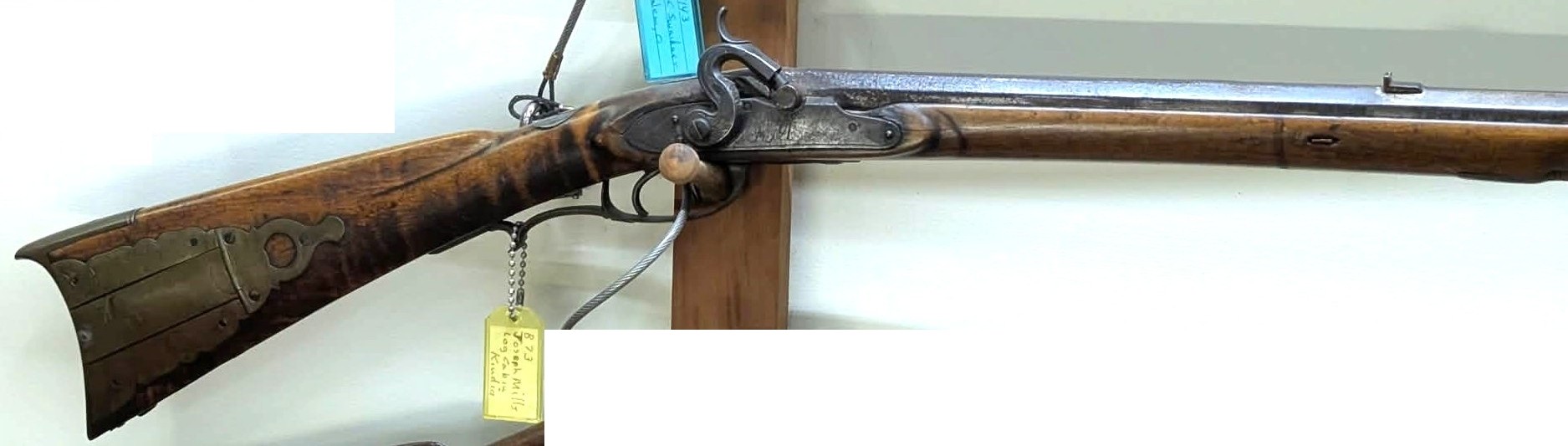


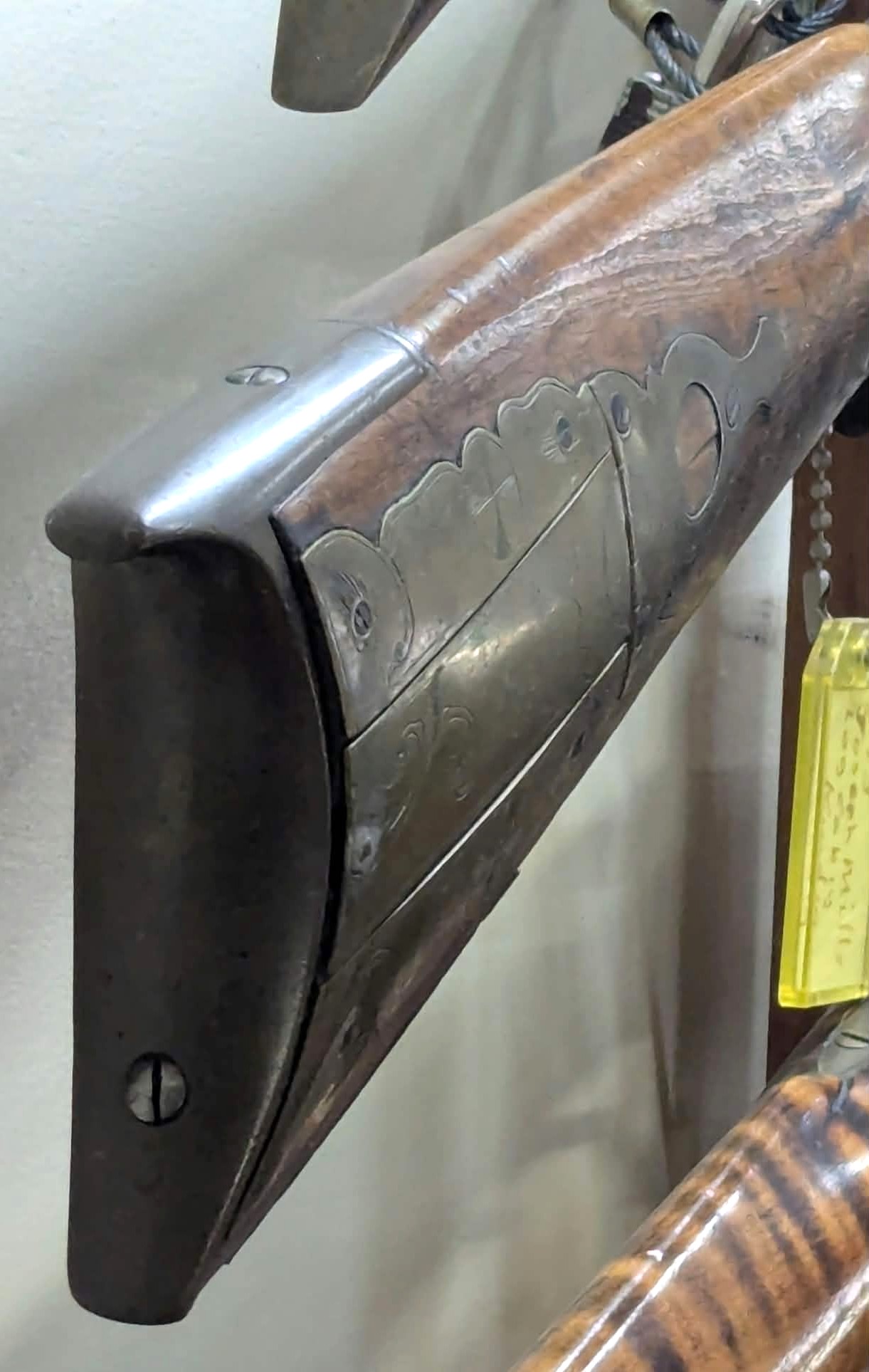
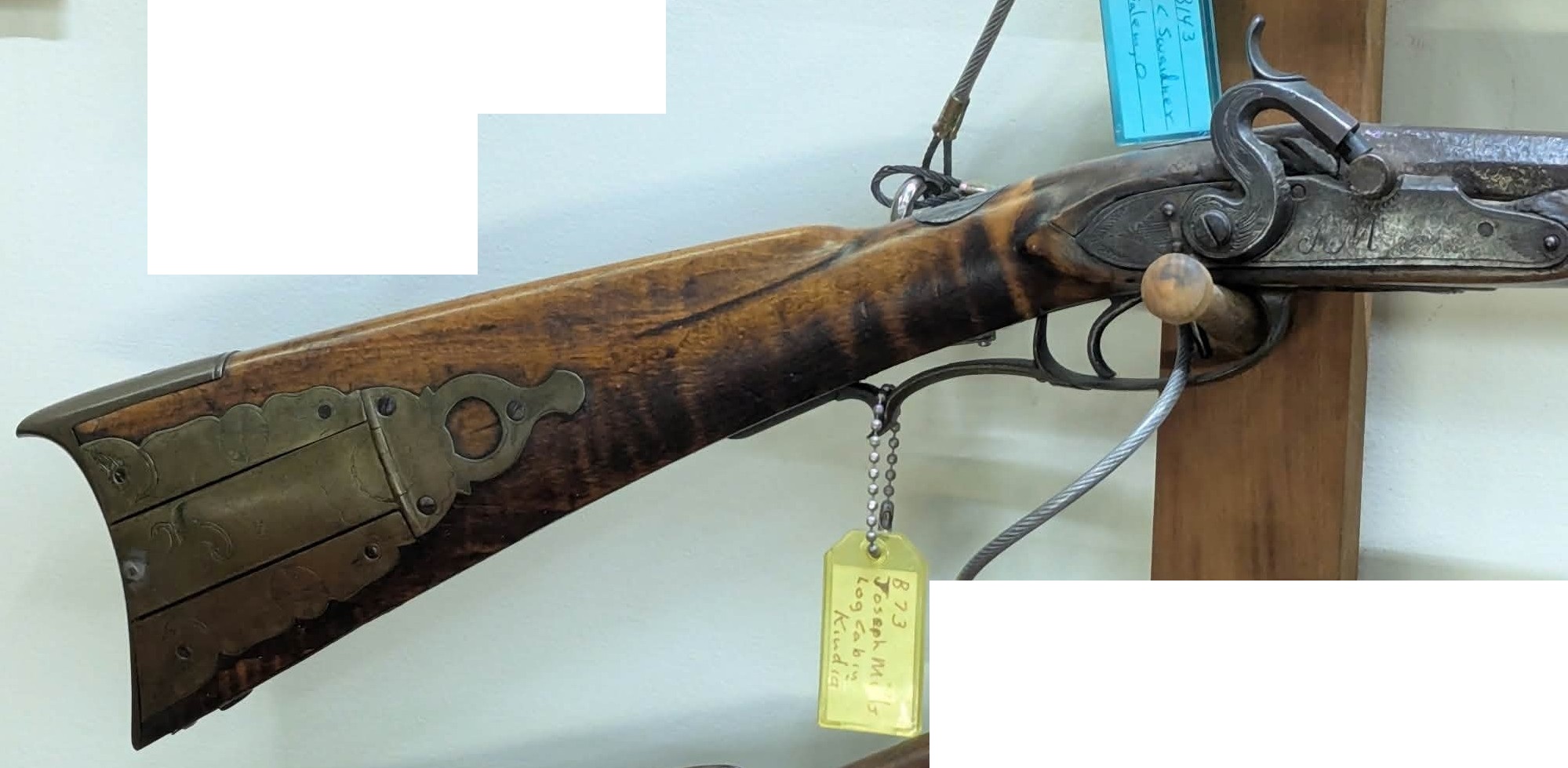
The following photo provides an enlarged view of the rear portion of the rifle from the buttplate to the percussion gun lock, and provides a side view of the trigger guard. A thumb plate is visible on the upper side of the wrist. Click here for an angled view of the buttplate and patch box.
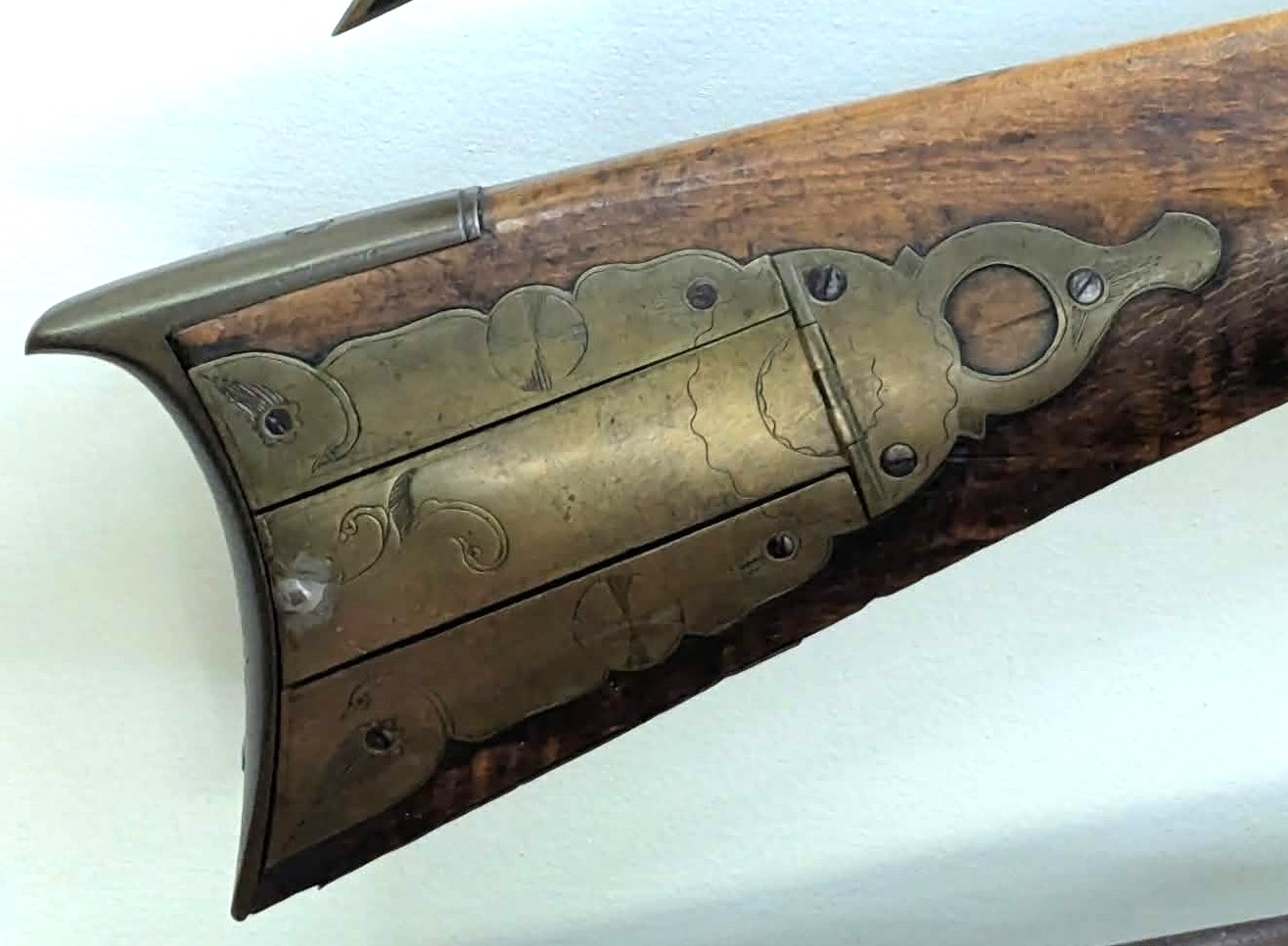
The following photo features the engraved brass patch box, which has a symmetric pierced finial.
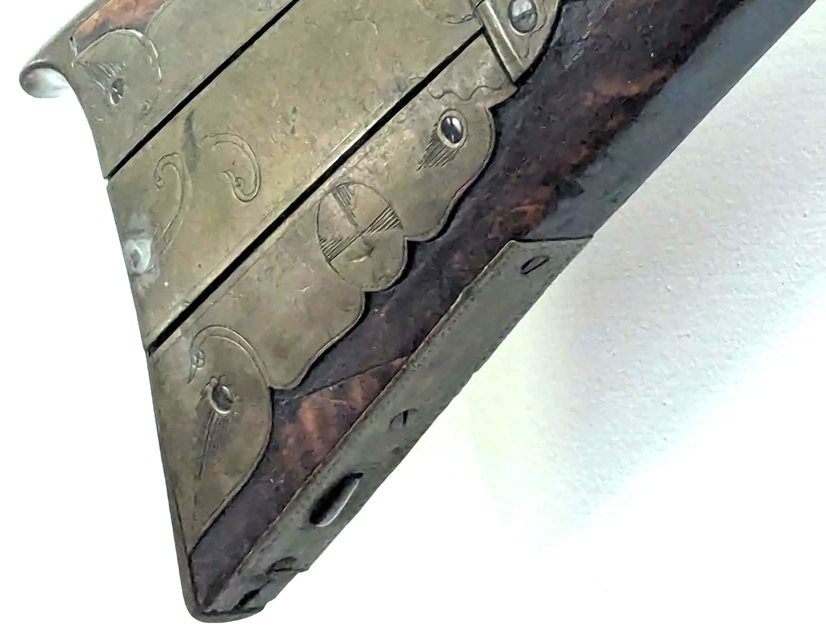
The following photo shows the lightly engraved toe plate and the patchbox release. The toe of the rifle stock is cracked and the rear end of the toe plate is broken. The toe plate is retained to the stock by three screws.
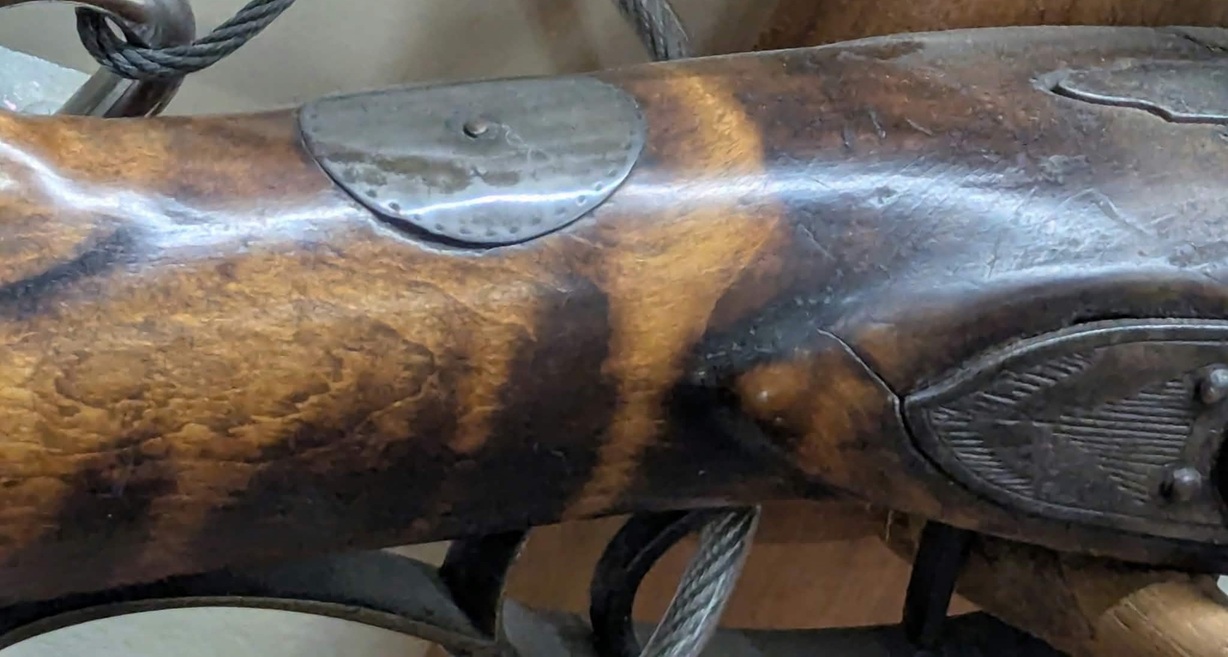
The following photo provides an oblique view of the thumb plate, which appears to be retained with a single nail. The photo also shows the tip of the tang and some of the decorative elements on the lock plate.
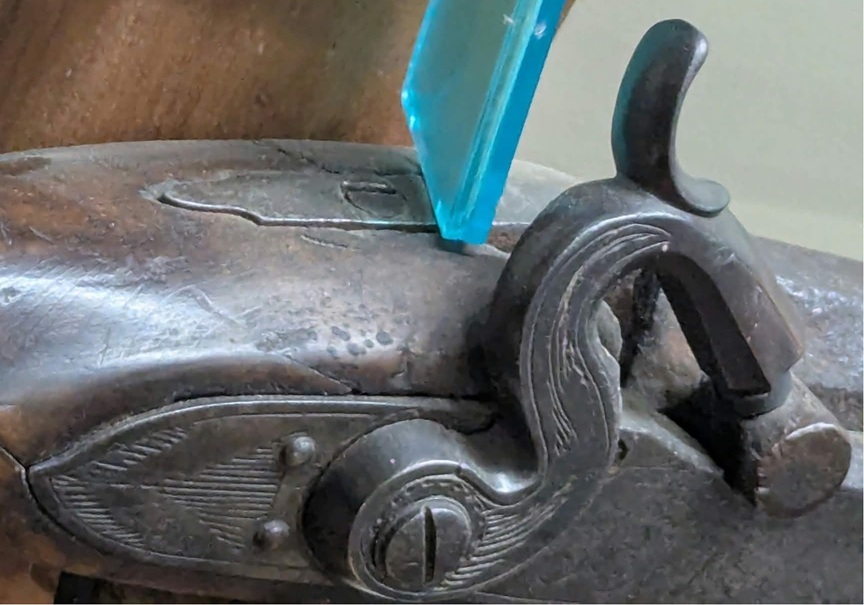
The following photo is included because it shows the tang of the Joseph Mills rifle. It also provides an interesting oblique view of the Bedford-style percussion hammer.
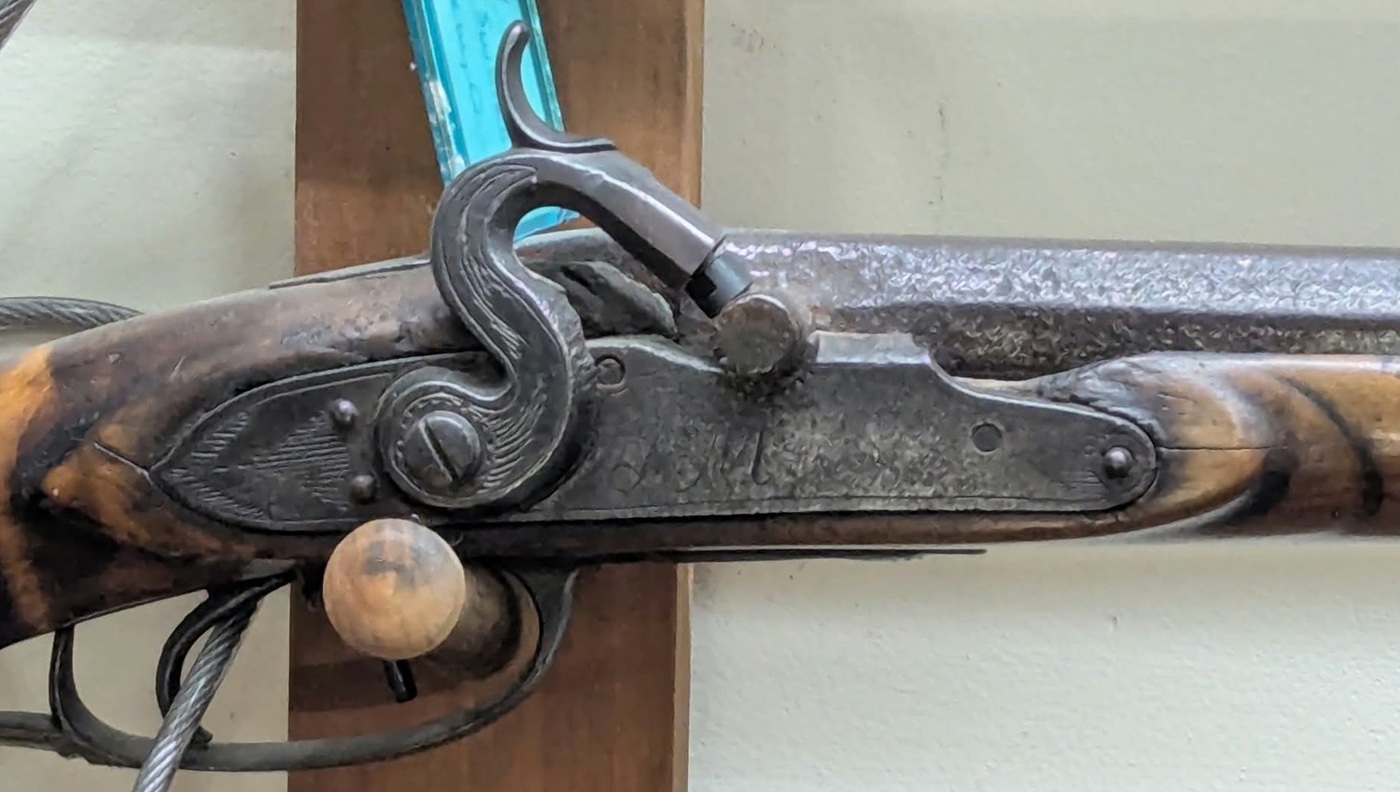
The following photo focuses on the percussion lock, which is engraved with the gunmaker's initials "JM" and incorporates a Bedford County, Pennsylvania-style hammer. To me, the decorations on the lock plate and hammer appear to be engraved rather than cast. The tail of the lock plate is pointed, as is the tail of the mating stock panel, and there is no evidence that the lock began its life as a flintlock.
If you look closely, you can see that this old gun has a double set trigger arrangement. The cylindrical drum does not incorporate a vent screw.
The following photo shows a key that retains the barrel to the gun stock, and provides an oblique view of the rear sight. It also provides a glimpse of the ramrod entry pipe.
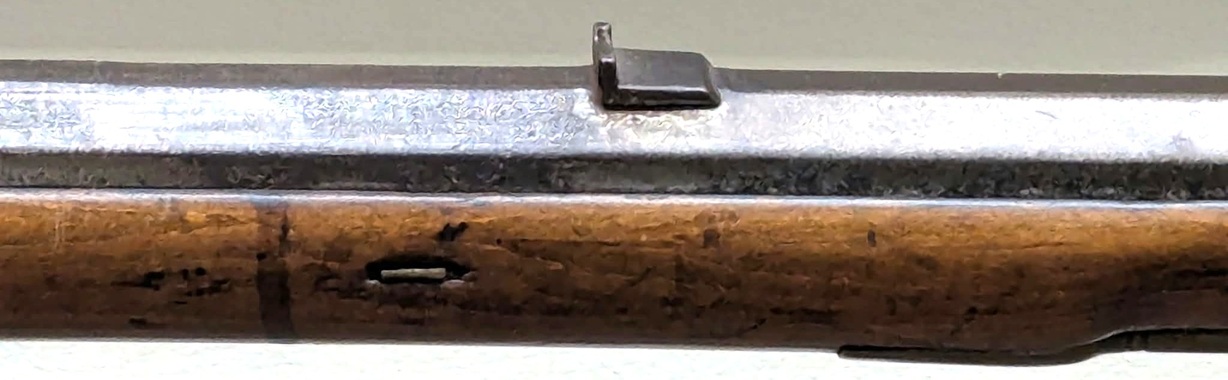
The following photo provides a side view of the ramrod entry pipe and rear sight. It also shows the incised lines carved into the fore-end of the stock.
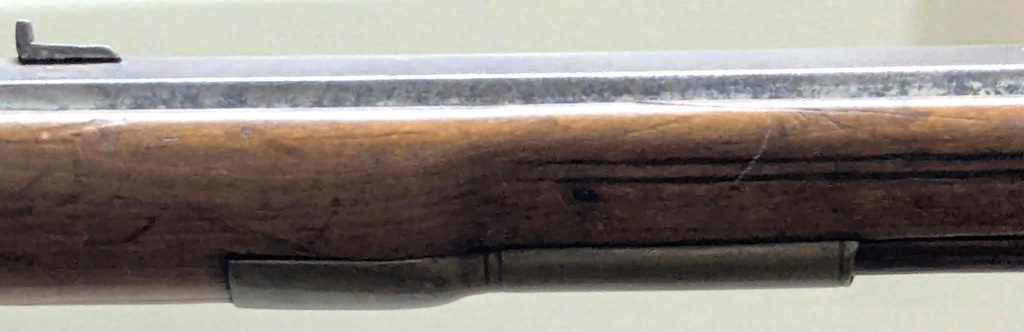
The following photo provides an oblique view of the muzzle, nosecap, fore-end, front sight, ramrod, and a ramrod pipe. The cut rifling has seven grooves, and the fore-end is decorated with a pair of incised lines. The photo also shows how the cross-sectional profile of the fore-end transitions to match that of the brass nosecap. The muzzle end of the barrel is decorated with a circle of indentations.
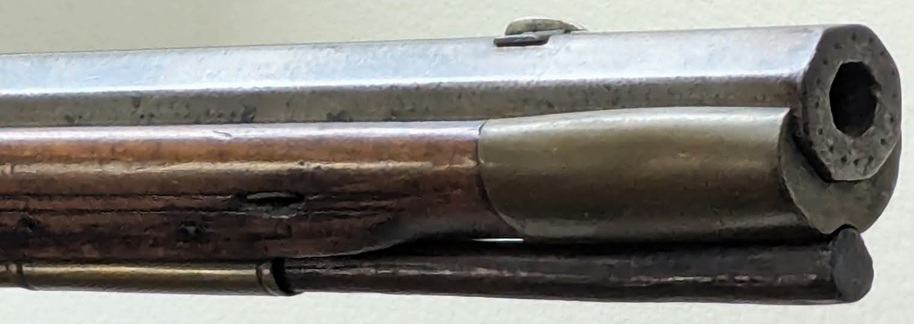
The following photo provides a side view of the front ramrod pipe and the front barrel key. It also shows the pins that retain the ramrod pipe to the stock.
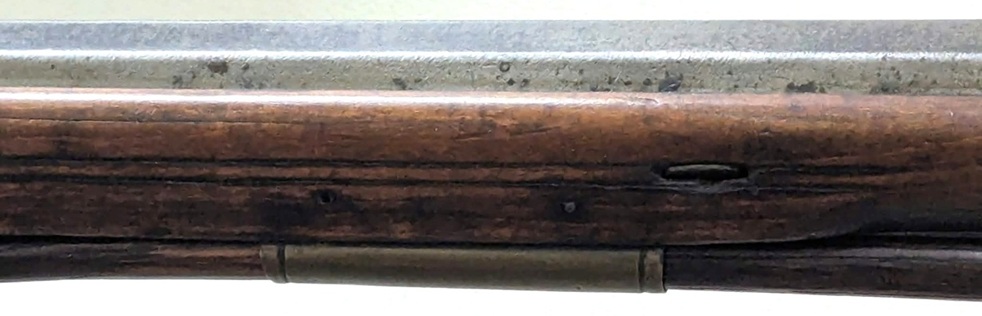
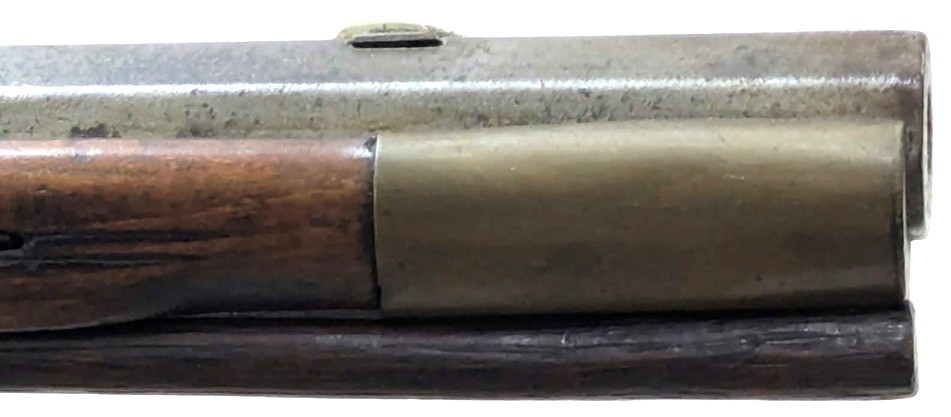
The following photo provides a side view of the nosecap and front sight.

Go to the Joseph Mills biography page