Introduction
L. Dietle
Photos
The next picture is a full-length view of the left-hand side of the Peter White gun. The barrel is retained by four brass keys, but only the rear-most key has protective escutcheons.
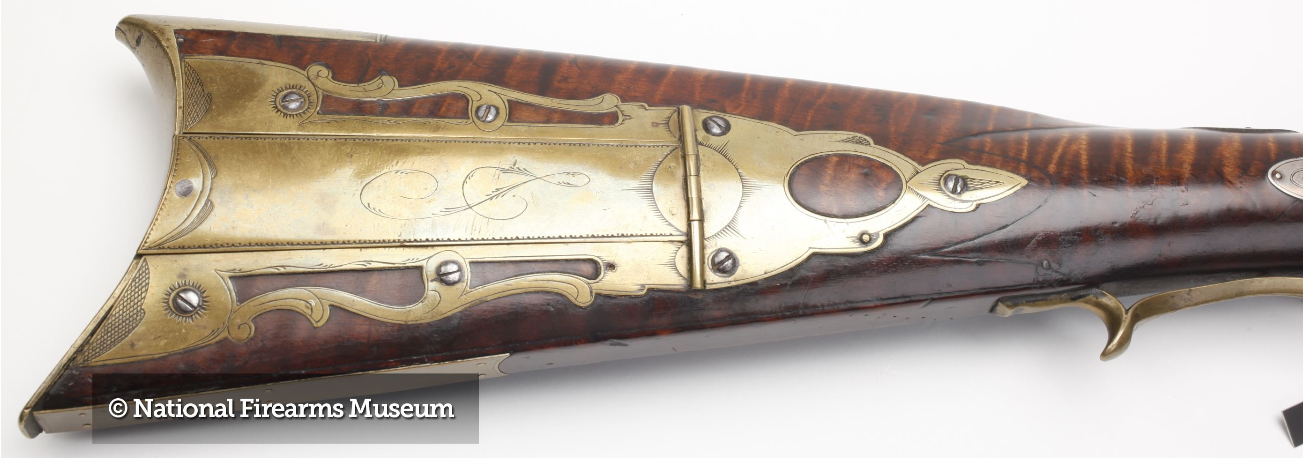
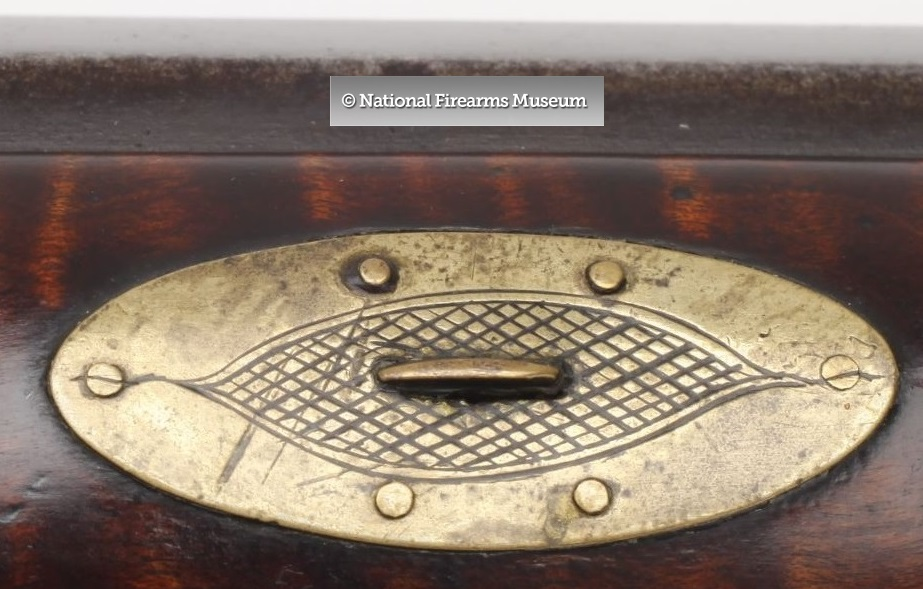
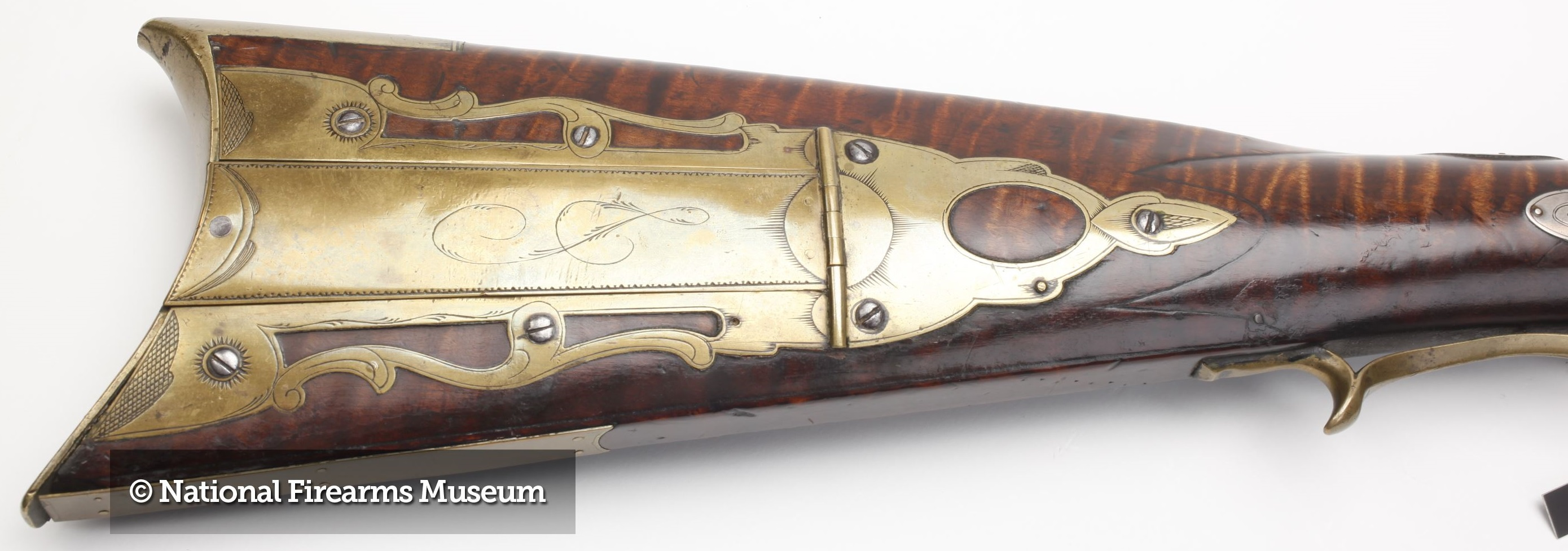
The next rifle picture shows the tastefully engraved patch box, which has five piercings.
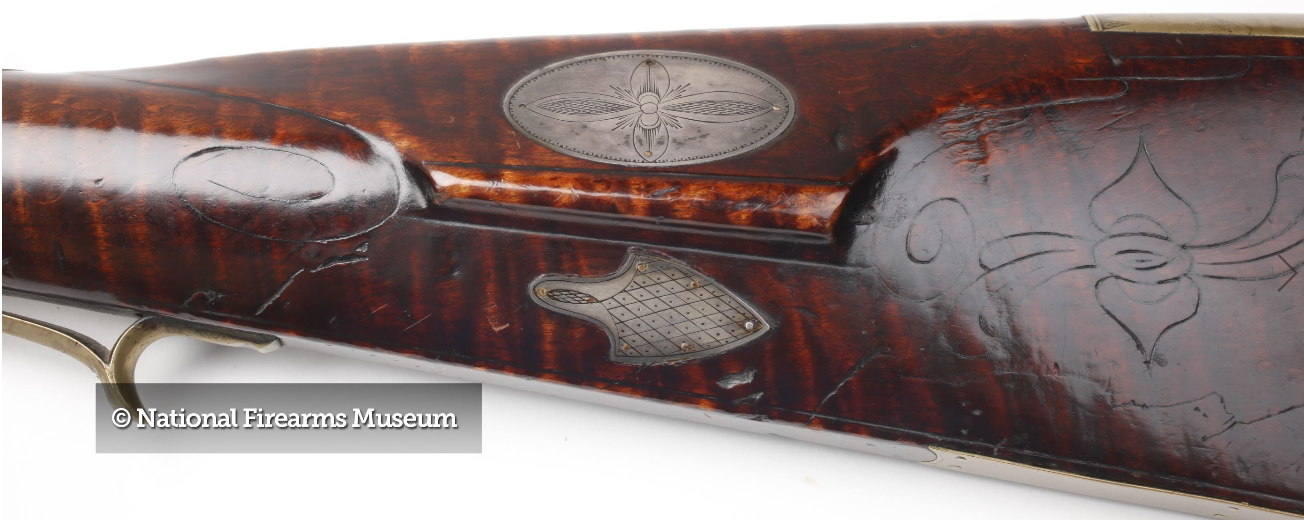
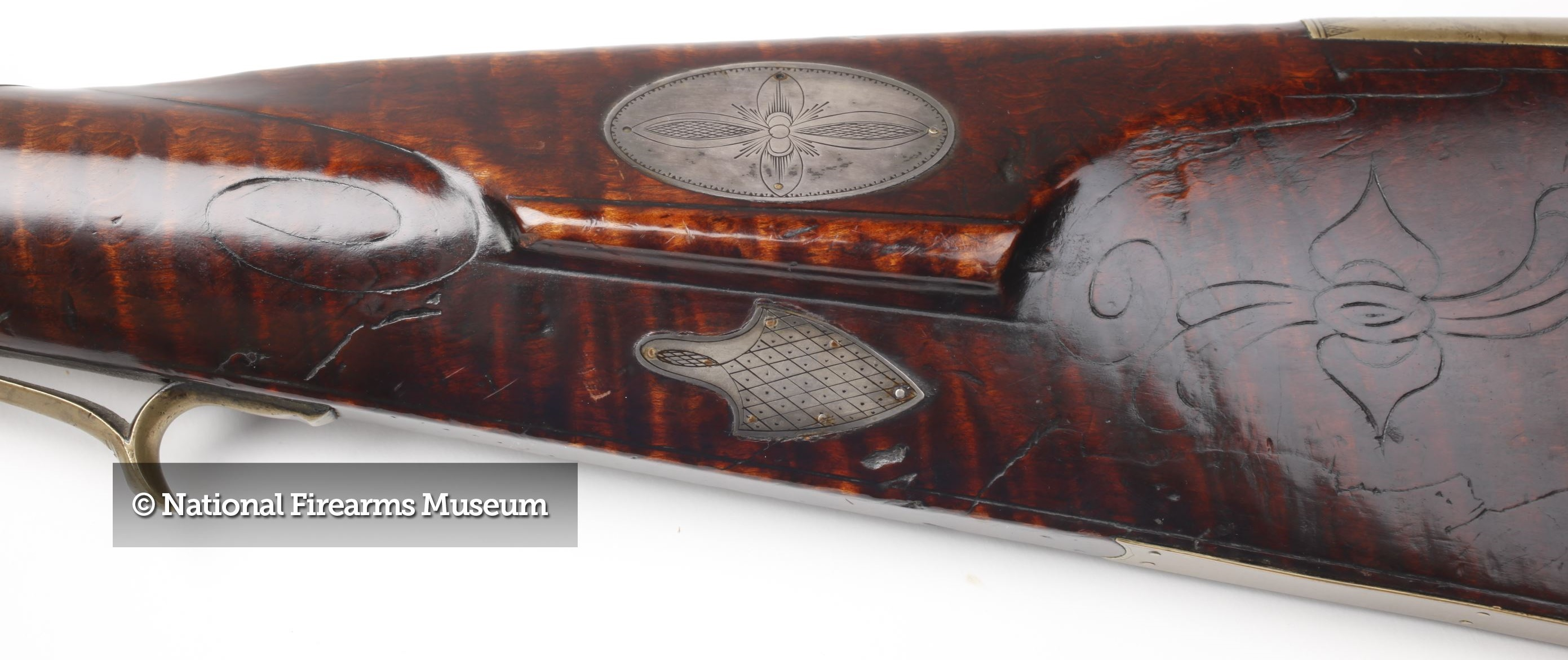
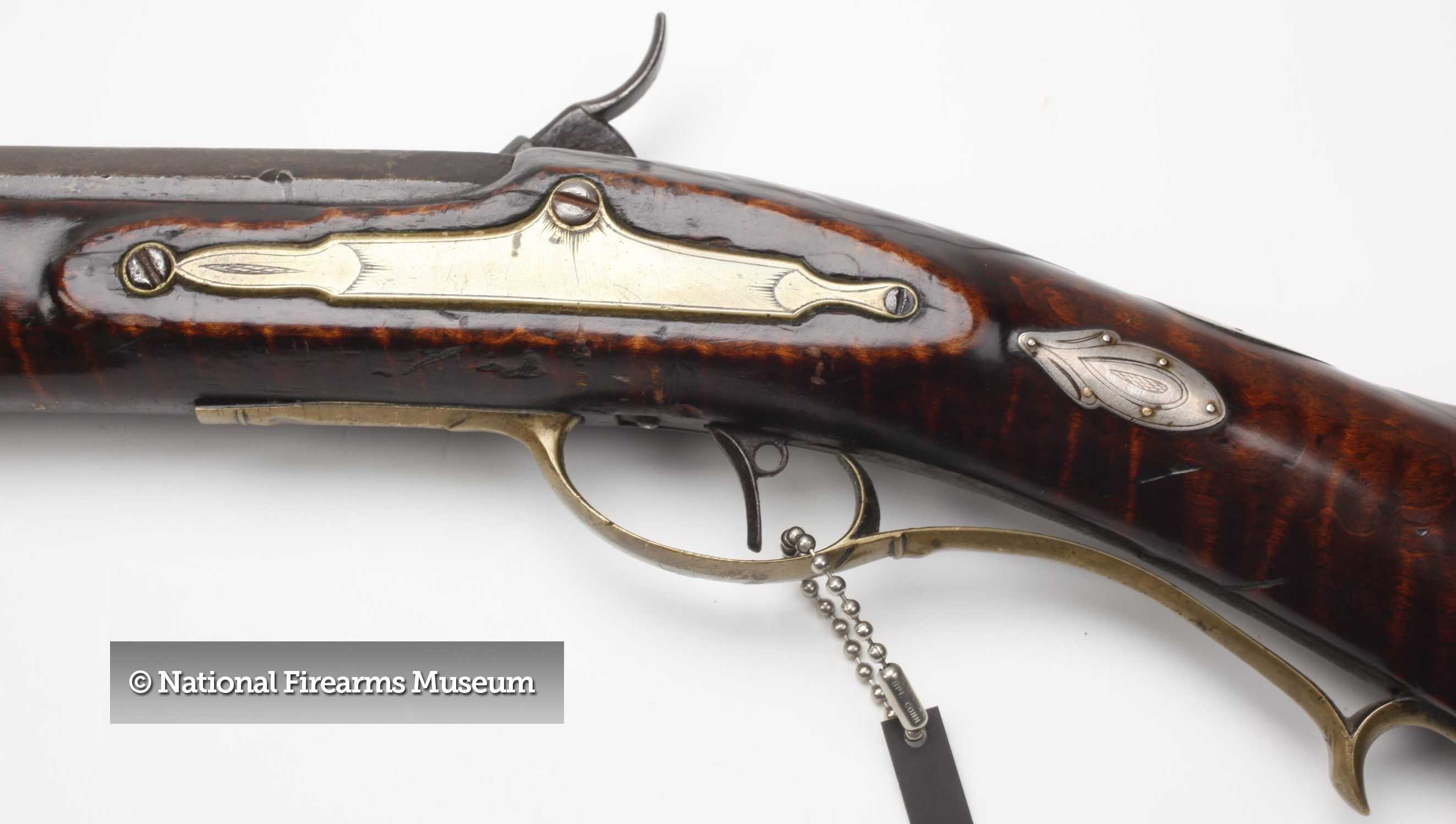
The next rifle picture shows a portion of the left-hand side of the buttstock of the Peter White muzzleloader. The cheekpiece inlay is elliptical and depicts a flower. A nicely engraved shield-based decorative inlay is located below the inlay. Also notice the incised carving aft of the cheekpiece.
The next picture is an enlargement of the stock inlays on and below the cheekpiece of the Peter White rifle.
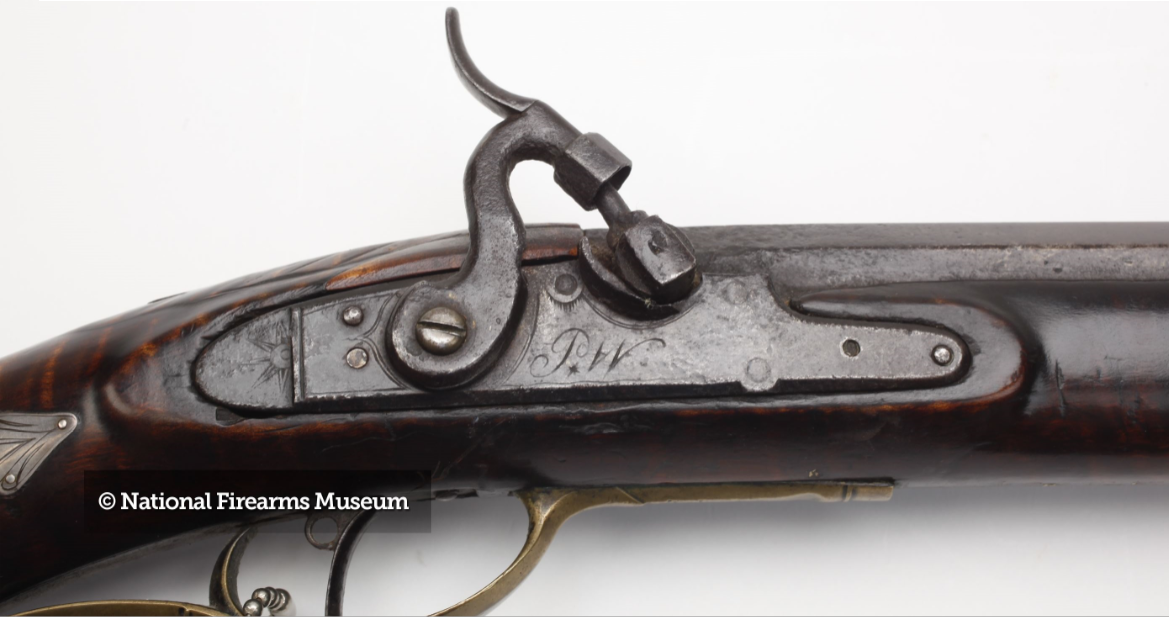
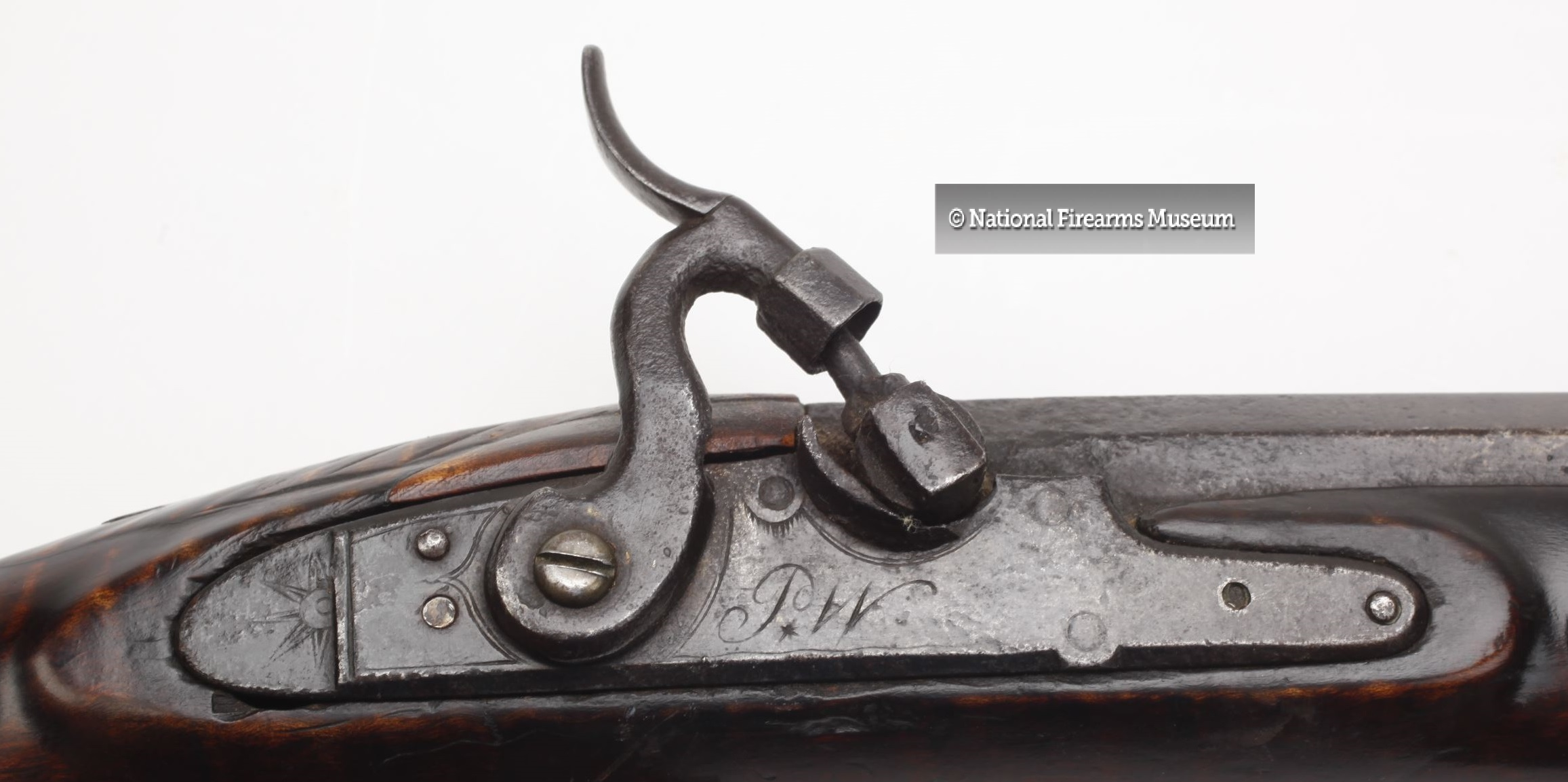
The next photograph highlights the "PW"-marked percussion conversion gun lock on the Peter White long rifle. The plugged hole for the frizzen spring screw and the vestigial remains of the pan inform us that this was originally a flintlock rifle. The hammer reflects the Bedford School of gunsmithing, but may have been produced by a different Bedford County gunsmith because Peter White had moved to Fayette County before the percussion ignition became popular. In the photo, the wood just above the lock and aft of the barrel appears to be replacement wood.
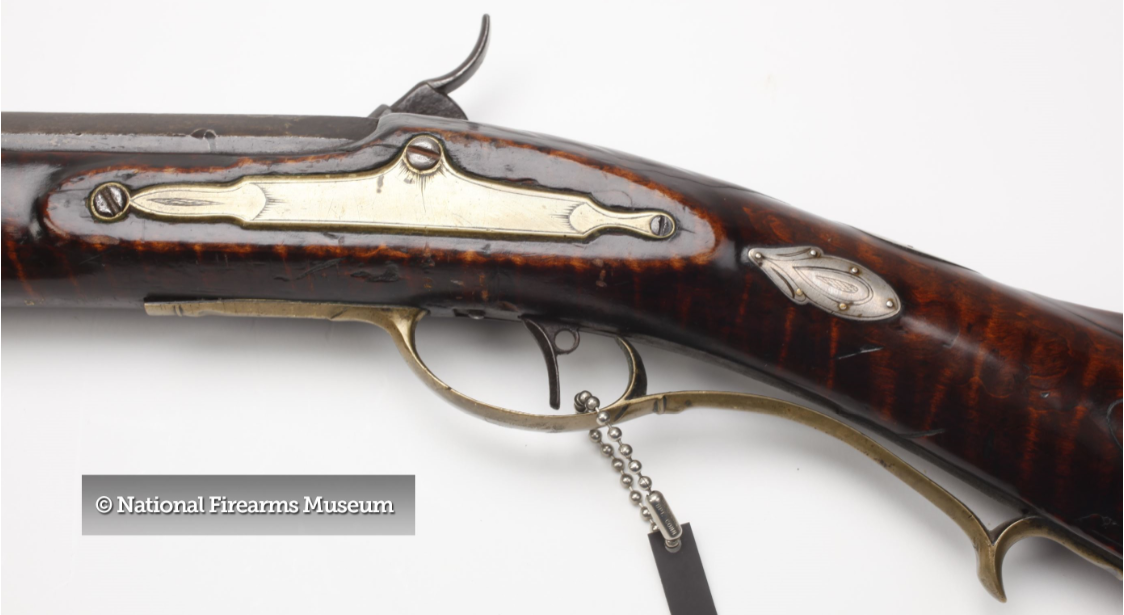
The next picture shows the beveled and engraved lock bolt plate of the Peter White muzzle loading rifle. The associated panel of the stock is also visible, along with the decorative inlay just aft of the panel.
The next rifle picture shows a tastefully engraved escutcheon at the rearmost barrel retention key of this fine Pennsylvania muzzleloader.
The following seven images are larger versions of some of the preceding images of the Peter White muzzleloader, to show more detail to those who may be interested. You will need to copy or save them to your computer to see them at full resolution.
Return to the Korns family genealogy home page
It is a privilege to be able to include these pictures of an antique full stock muzzle loading rifle by the gunmaker Peter White. Every picture on this web page is copyrighted by the National Rifle Association (NRA) and is included here courtesy of the NRA Museums, nramuseum.org with the express permission of Philip Schreier, Senior Curator of the NRA Museum. Click here for biographical information on Peter White, who worked in Bedford County, Pennsylvania as a gunsmith before moving to Fayette County, and evidently got his start in Emmitsburg, Maryland.


The first picture is a view of the right-hand side of this Pennsylvania long rifle. The underbelly of the buttstock is straight, and the comb is minimal, consistent with the style used by the Bedford School of gunsmithing. The change in the cross-sectional dimensions of the stock fore and aft of the entry pipe is accentuated by the relatively steep angle of the short, tilted portion of the entry pipe. Some Bedford County rifles use a longer and straighter entry pipe, and tilt the whole thing at a slight angle, which tends to camouflage the change in stock dimensions. Click here to see an example of such an entry pipe implementation.