The farm of the Lepley gunsmiths was next door to my grandfather's Southampton township, Somerset County farm (where my great-grandfather and great-great grandfather Korns had also lived). I have been trying to find photos of a Somerset County Lepley rifle to publish on this website for over twenty years. As far as I can tell, no photo of a Somerset County Lepley rifle has ever been published before today.
The antique full stock Lepley rifle pictured below is 30 caliber with a 38-inch barrel. It is not marked "Lepley", but it is known to be a Lepley rifle because it has been handed down in the Lepley family for generations. To see the antique gunsmithing tools and gun parts that were left over from the gunsmithing operation, and to see Lepley biographical information, click here.
This page is part of an online project that features the old-time guns and gunsmiths of Bedford and Somerset counties, Pennsylvania.
L. Dietle, February 16, 2020

Photos
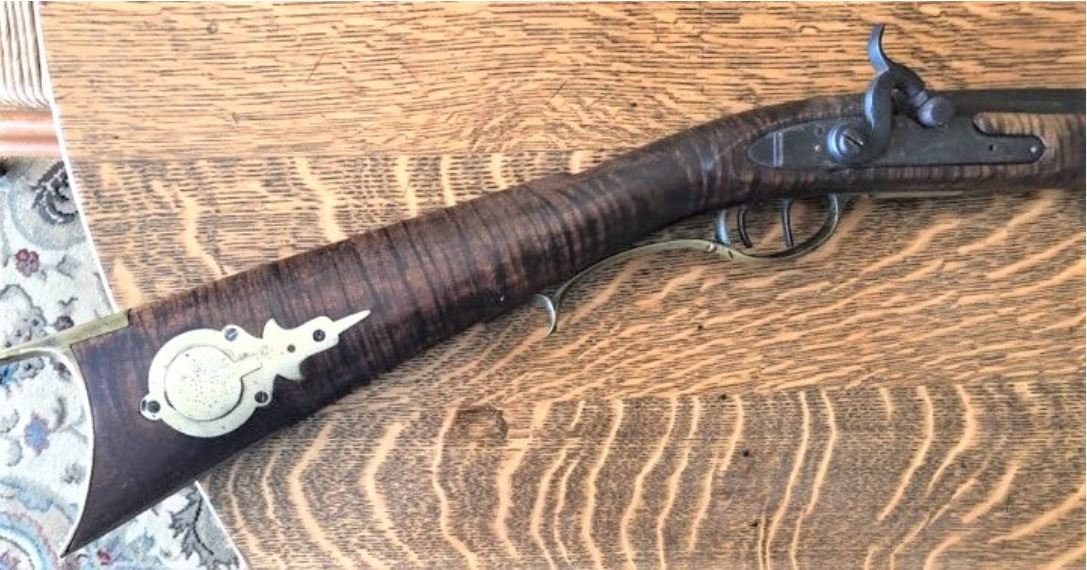
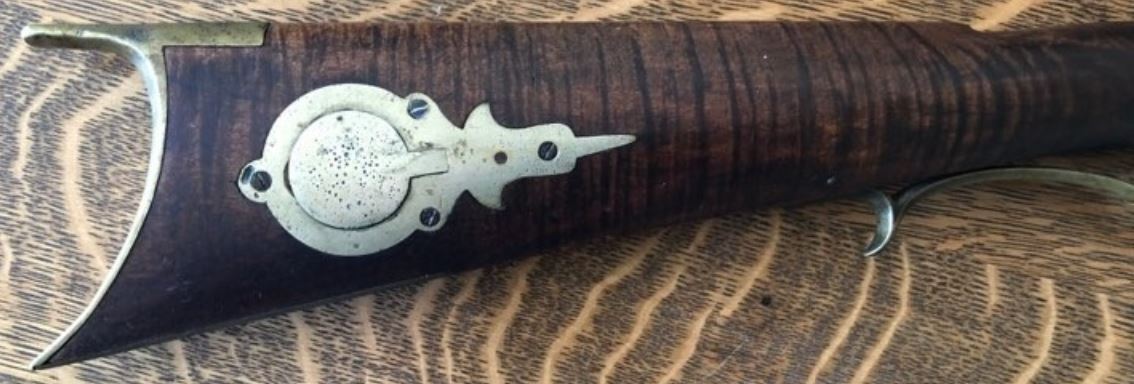
The next photo shows the buttstock of the rifle. The buttstock has a fairly typical Somerset & Bedford County-style profile, with a straight underside and a low comb. I don't know as much as I would like to know about rifles from Bedford and Somerset counties, Pennsylvania and I wonder if this somewhat atypical butt plate represents a later style that may have been purchased from some mail order enterprise. The gun has a cap box instead of a patch box, which helps to date the rifle to a later period, toward the end of the black powder era.
The next photograph is a bottom view of the cast brass trigger guard of the Lepley rifle. The forward part of the guard is flared toward its front. The holes for the metal cross-pin that secures the rear of the guard to the stock are visible. It looks like someone may have added a screw for additional security, but the photograph is not clear enough to be certain.
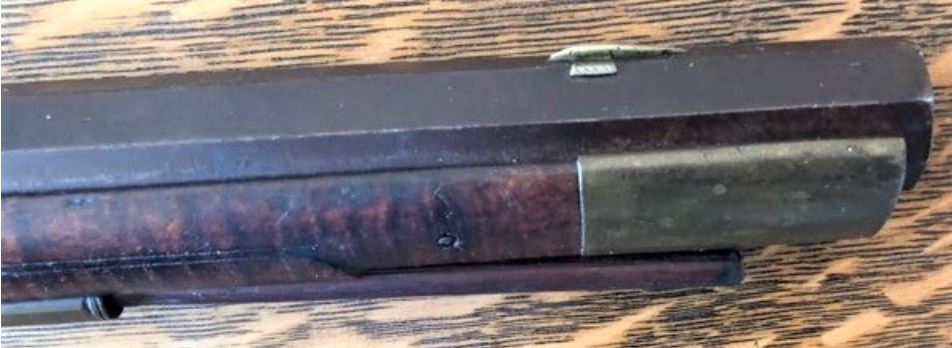
The next photo shows the front sight and nose cap area of the Lepley long rifle. The dovetail base of the front sight is lightly engraved. The rifle has a relatively long nose cap that has about the same lateral cross-section as the forestock. In my opinion, these two aspects of the nose cap help to make the rifle appear slender. As can be seen in this photo, the forestock is decorated with two incised lines, and the barrel is pinned to the stock.
The following picture provides a closer view of the cap box and the deeply hooked crescent buttplate of the Lepley muzzle loading rifle. As can be seen in this photo, the maple wood of the stock is nicely figured and has a dark finish. About forty or fifty years ago I read that maple is more curly in rocky areas. I can testify that the Lepley farm is in a rocky area, having picked rock from the fields of the adjacent farm, having seen the stone fences that were once common in the area before being bought up as construction material, and having hunted, camped, gathered (maple) sugar water, and otherwise tromped through the local forest.
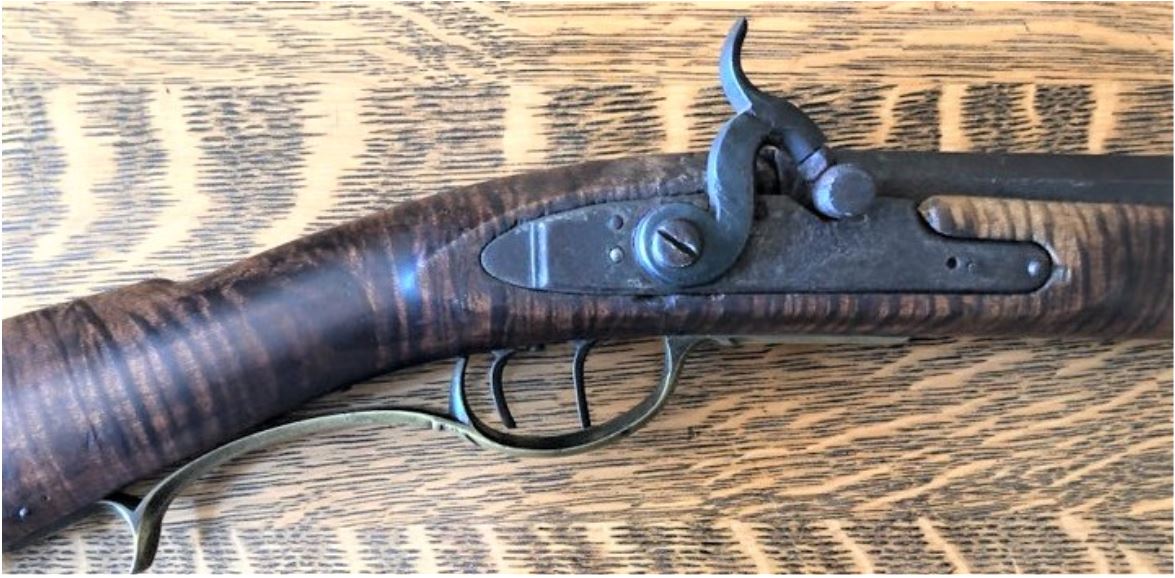
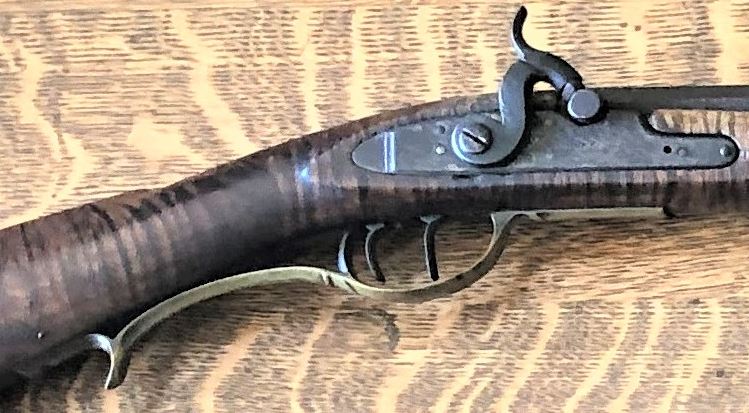
The next photo highlights the lock and trigger guard area of the Lepley muzzleloader. The hole and adjacent projecting pin in the lock plate are from replacement of the main spring. The spur of the percussion hammer has the forward curve that is common to rifles in nearby Bedford County, Pennsylvania.
The next photo just provides a slightly differently angled view of the lock and trigger guard area of the Lepley gun, showing the profile of the hammer a little better than the previous photo. The deep concave curve of the spur is tangent to the convex curve of the top of the hammer nose. The rounded tail of the lock plate is thinner than the remainder of the lock plate. Much of the thicker portion of the lock plate is beveled, while the tail is unbeveled. A vertical slash-like element crosses the width of the lock plate, partitioning the thinner tail from the thicker portion of the lock plate.
The next photo shows the entry pipe area of the Lepley muzzle loading long rifle. The open rear sight is mounted over the forward part of the entry pipe. The transition from the grooved part of the stock to the drilled forearm portion of the stock is relatively abrupt.
The next picture highlights some of the grooved part of the stock that is located forward of the ramrod entry pipe. The octagonal barrel is retained by metal cross-pins, and two of the pins are visible in the picture.
The next photo of the Lepley rifle shows the ramrod thimbles and the nose cap.
The next image provides an oblique view of the forestock that shows the grooved underside of the nose cap. No seam is visible between the end and body portions of the nose cap. Near the top of the image, there is a step change in the profile of the forestock.
The next photo is an oblique view of the brass butt plate and cap box. Cap boxes like this one have a spring to hold the door closed. A little fingernail recess is provided to facilitate opening the door. This photo also reveals the presence and length of a brass toe plate.
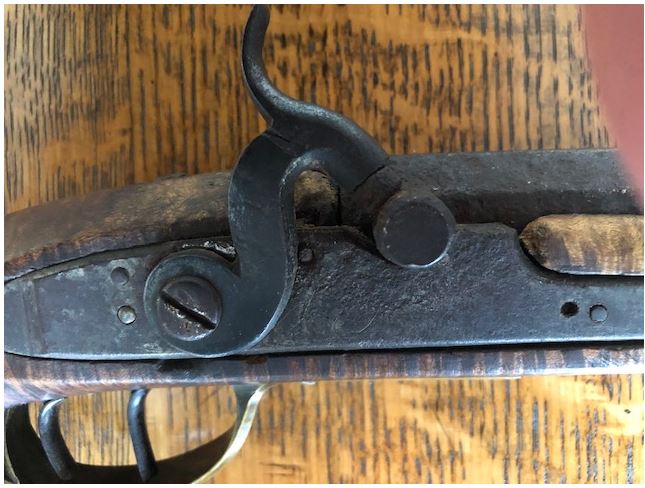
The next photo provides a slightly differently angled view of the percussion hammer of the Lepley muzzle loading rifle. Although this is a Somerset County rifle, the hammer resembles the type of hammer commonly found on Bedford County rifles.
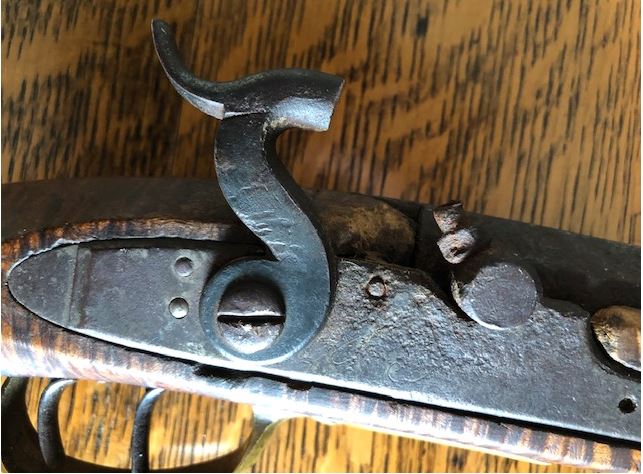
The next photo provides an excellent side view of the hammer in the cocked position. Because of the lighting, this photo may show the lower half of some eroded engraved cursive initials. The damaged condition of the wood near the nipple and the corrosive erosion of the lock plate show that this rifle has been fired many times. The percussion nipple, which is mounted on a cylindrical drum, is quite short. I wonder if its length is somehow the result of heavy use.
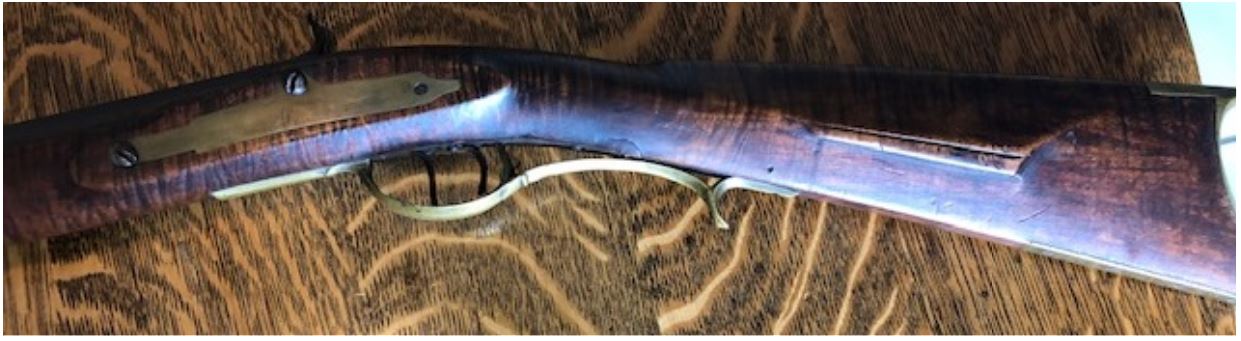
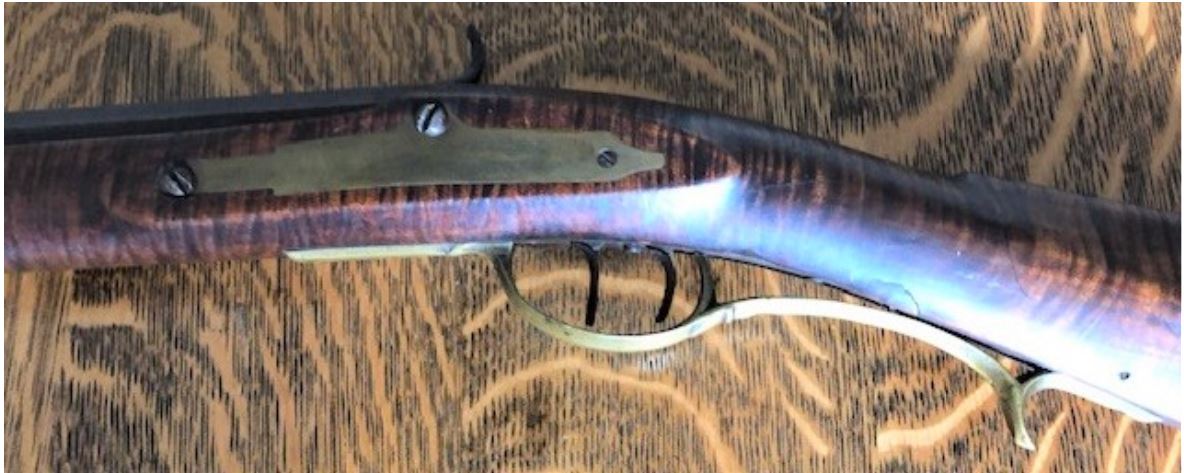
The next photo shows a portion of the left-hand side of this old cap lock rifle, including the butt stock, trigger guard area, and lock bolt plate panel area. The bottom portion of the cheekpiece incorporates a decorative incised line. The surface of the gun stock has a sleek, burnished appearance.
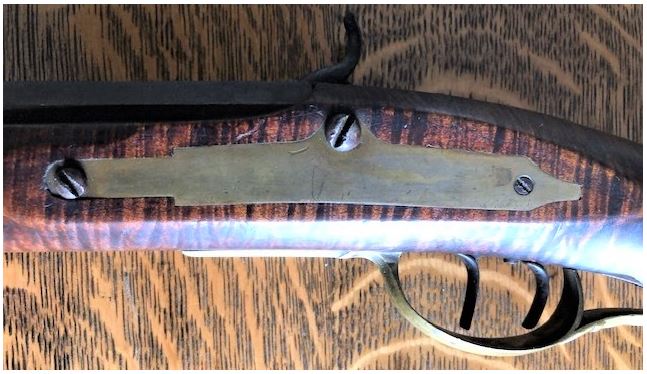
The next photo shows the flat, unengraved lock bolt plate on the left-hand side of the Lepley rifle. The fit of the lock bolt plate to its mortise in the stock is excellent, and the plate appears to be flush with the surface of the left-hand stock panel. The rear end of the lock plate ends in a rat tail. The middle and front screws retain the gun lock to the stock. The rear screw retains the lock bolt plate to the gun stock when the lock screws are absent.
The photo also provides a look inside the bow of the trigger guard, which houses a double set trigger arrangement. The set trigger has a more pronounced curve, compared to the hair trigger. The adjustment screw is located between the triggers.
The next photo is another view of the lock bolt plate and associated stock panel, because you can't have too many photos; right? This photo shows that the stock panel has a streamlined tail, like so many rifles of the Bedford School employ. The Somerset County farm where the Lepley gunsmiths worked is only 1.5 miles from Bedford County.
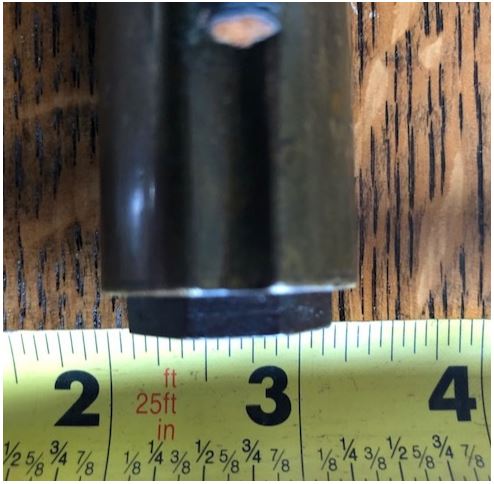
The next photo shows the lateral width of the nose cap, and the axial projection of the barrel from the nose cap.
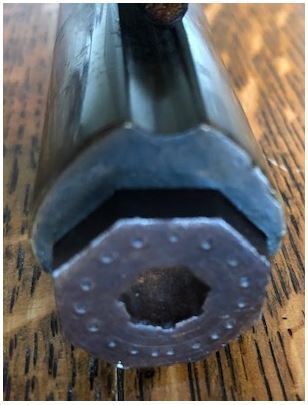
The next photo shows the muzzle of the Lepley muzzleloader. The bore has seven cut rifling grooves, and the face of the muzzle end of the full octagon barrel is decorated with a circle of punch marks. The fit between the octagonal barrel and the front of the nose cap appears to be excellent.
Refer to the Gunsmith Index for additional information on the gunsmiths of Somerset and Bedford Counties, and the Pennsylvania long rifles they built.

The following photo shows the entire right-hand side of a percussion long rifle made by the Lepley family of Somerset County, Pennsylvania. This handsome firearm has a full-length curly maple stock.