The following photos show a handsome 36 caliber muzzle loading rifle that is signed "J * Lepley". The photos were provided by the owner of the rifle, Thomas Statler. The octagonal barrel of this rifle is quite long, at 43-1/2 inches. To read about the gunsmith Joseph Lepley, click here.
This page is part of an online project that features the old-time guns and gunsmiths of Bedford and Somerset counties, Pennsylvania.
L. Dietle

Photos
The next photo shows the engraved cursive barrel signature "J * Lepley" on the upper flat of the octagonal barrel.
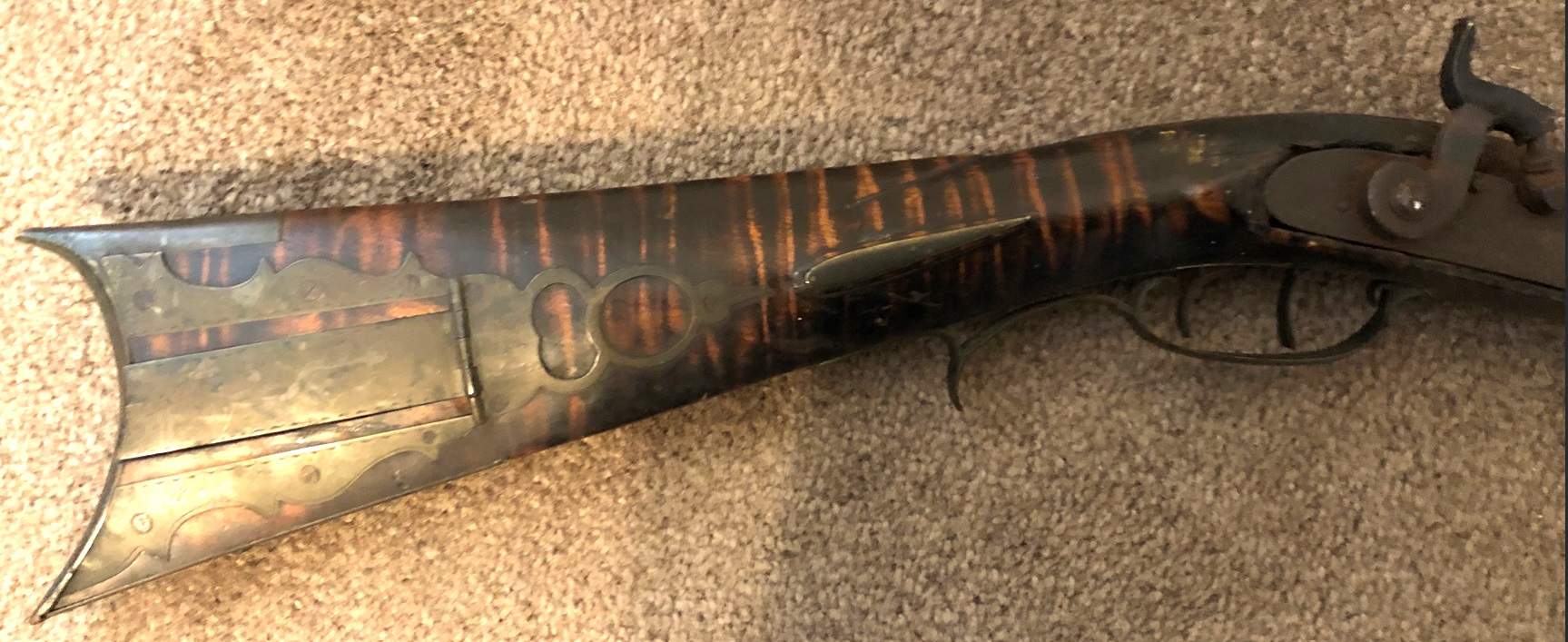
The next photo is zoomed in to show the portion of the rifle between the butt plate and the ramrod entry pipe. The rifle has an adjustable double set trigger setup. The projecting adjustment screw is visible between the triggers. A very elongated teardrop inlay is positioned on a similarly-shaped raised panel that is located to the rearward of of the lock panel of the stock. The rounded-tail gun lock appears to be a store-bought commercially manufactured lock rather than a hand-made lock, and the nipple is mounted on a drum.
The next image highlights the right-hand side of the buttstock, which terminates in a deeply curved crescent buttplate. The symmetrical finial of the lightly engraved four-piece patch box has two piercings. The unpierced side panels of the patch box are separated from the lid by strips of wood. The buttstock has the low straight comb and straight belly that are common to Somerset and Bedford county muzzle loading rifles.
The next photo shows the fore end of this antique 19th century firearm, and highlights the fancy grade curl of the maple stock. The barrel is secured to the stock with metal pins, rather than keys.
Here, below, is a larger view of the forestock portion of this old caplock long rifle, providing a look at the strikingly long nose cap and the forward ramrod thimble. This is the only picture that shows the blade of the front sight.
The next photo shows the cheekpiece side of the buttstock, and the lock bolt plate. The cheekpiece has two longitudinally oriented incised lines bracketing what appears to be a silver inlay. The small lock bolt plate reveals that the percussion lock is retained to the rifle stock by a single threaded fastener.
Looking inside the bow of the trigger guard, both the set trigger and the hair trigger are curved, but the shapes are probably dissimilar enough to be identifiable by feel.
The next photograph provides an oblique view of the underside of the rear portion of this antique black powder rifle. The projecting button on the brass toe plate is probably the release for the lid of the patch box. The photograph also shows the underside of the cast brass trigger guard. In front of the bow of the guard, the part that contacts the underside of the stock becomes wider toward its front end. The transverse metal pin that secures the rear of the trigger guard to the stock is visible. The lower edge of the lock panel of the stock is formed by an intersection with the underside of the stock.
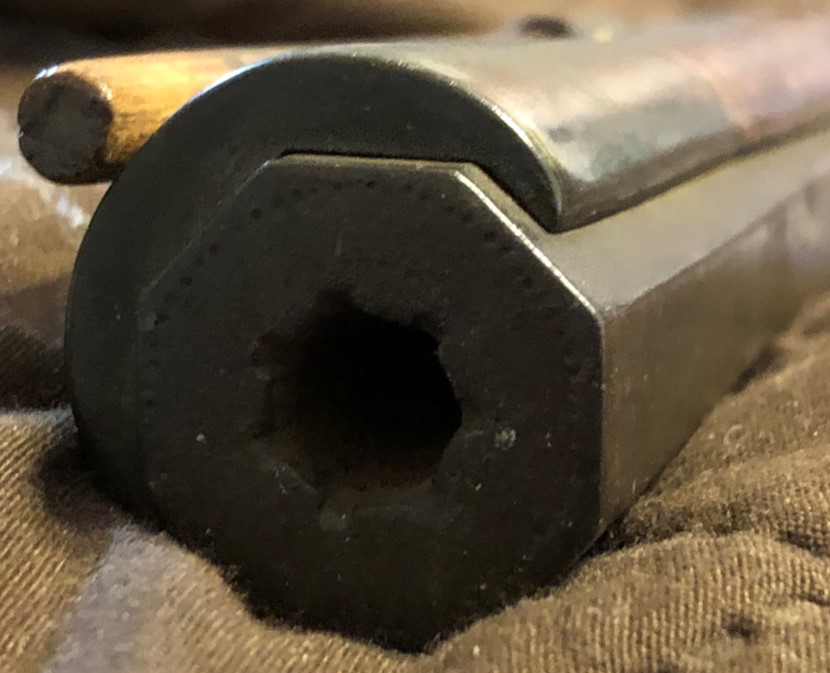
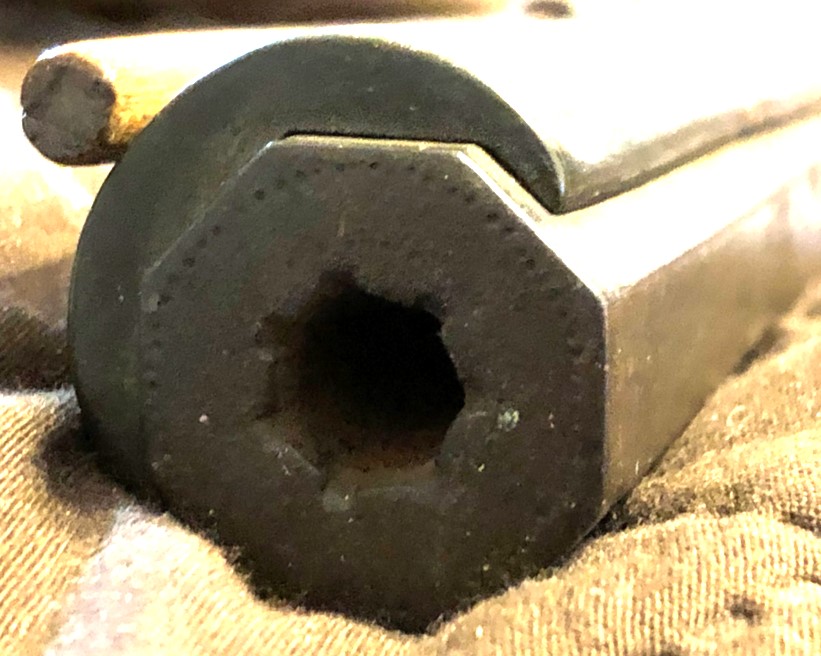
The next two photos (one having digitally adjusted light intensity) show the muzzle and the front end of the nose cap of this percussion muzzleloader. The bore has very deep seven-groove cut rifling. A decorative circle is punched into the front end surface of the barrel.
See the Gunsmithing Index for additional muzzleloader pictures and history.
Go to the home page for additional history-related topics.

The following photo shows the entire right-hand side of a full-stock percussion long rifle made by Joseph Lepley. The rifle is stocked in excellent grade of curly maple.