The antique full stock percussion long rifle featured on this page was made and signed by Abraham Megahan, who worked as a gunsmith in Huntingdon and Somerset Counties, Pennsylvania.
This page is part of an online project that features the old-time guns and gunsmiths of Bedford and Somerset counties, Pennsylvania.
L. Dietle

Photos
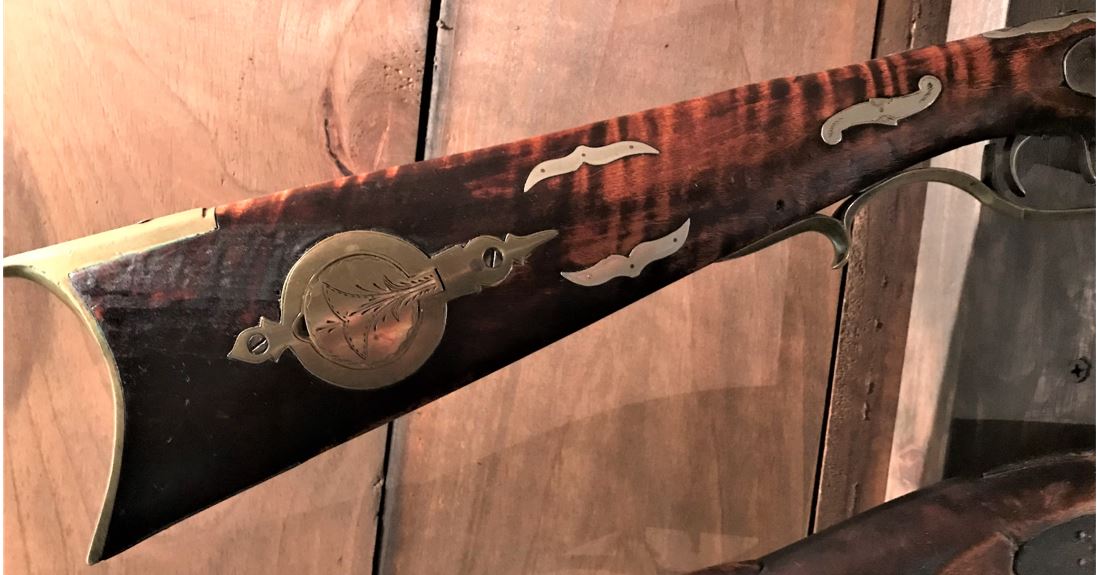
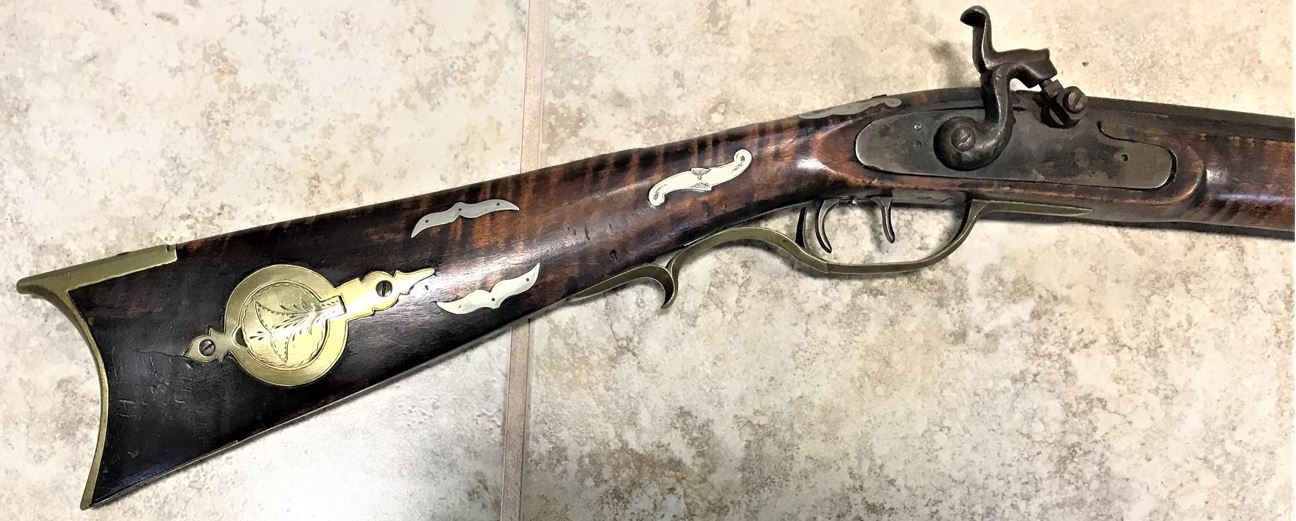
The next photograph is zoomed in on the right-hand side of the buttstock, which has an engraved brass cap box and three silver decorative inlays. The inlay in the wrist area is engraved. The upper and lower lines of the buttstock are straight, with a barely perceptible comb. The buttstock of this antique gun is fitted with a crescent-shaped brass buttplate.
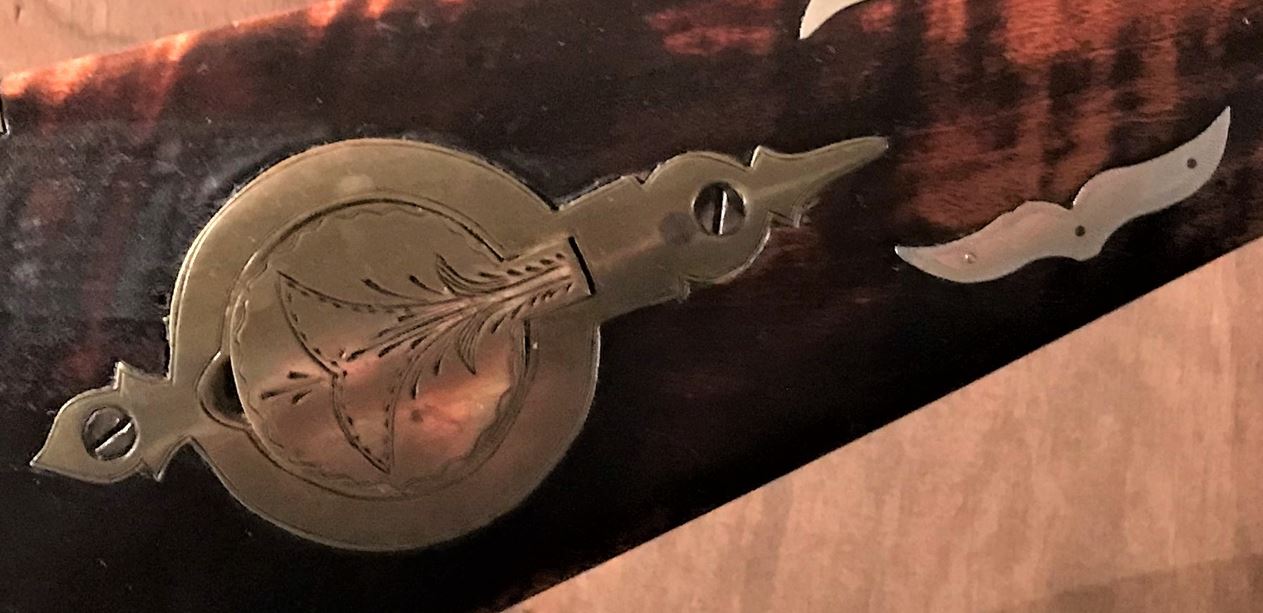
The next photo provides a closeup of the engraved cap box and one of the silver inlays on this elaborately decorated 19th century muzzleloader. The inlay appears to be inspired by a bird in flight.
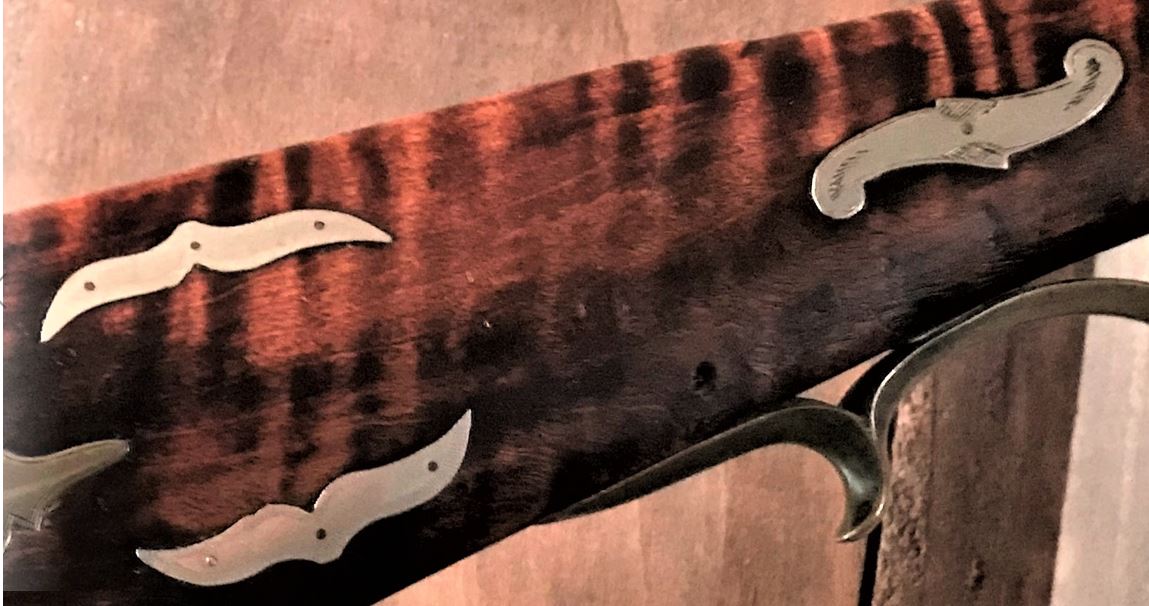
The following picture provides an enlarged view of the three silver inlays on the right-hand side of the buttstock of this antique firearm. The hole for the metal pin that secures the rear of the trigger guard to the gun stock is also visible.
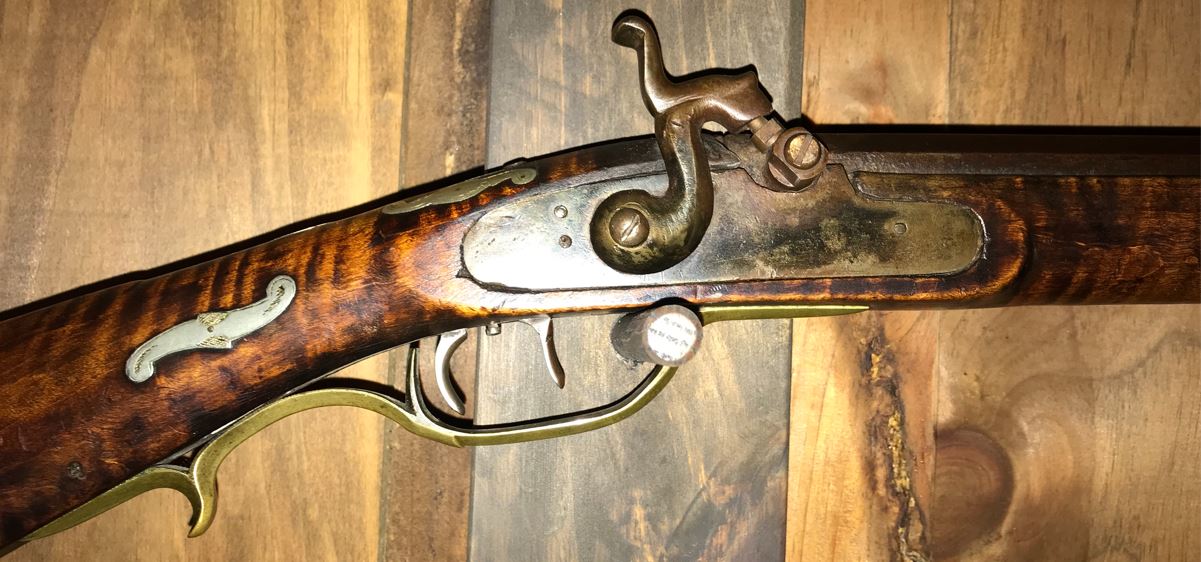
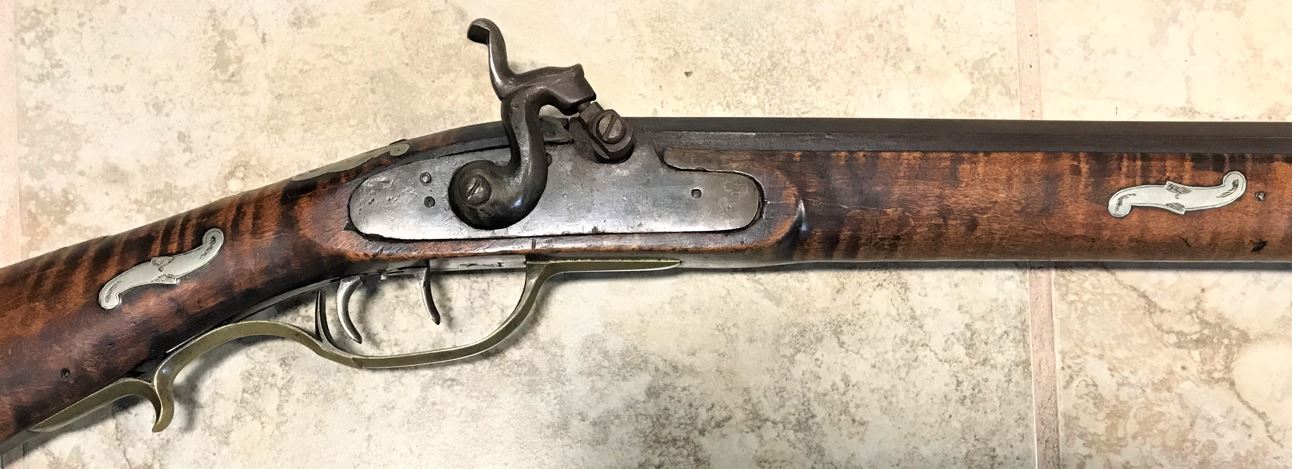
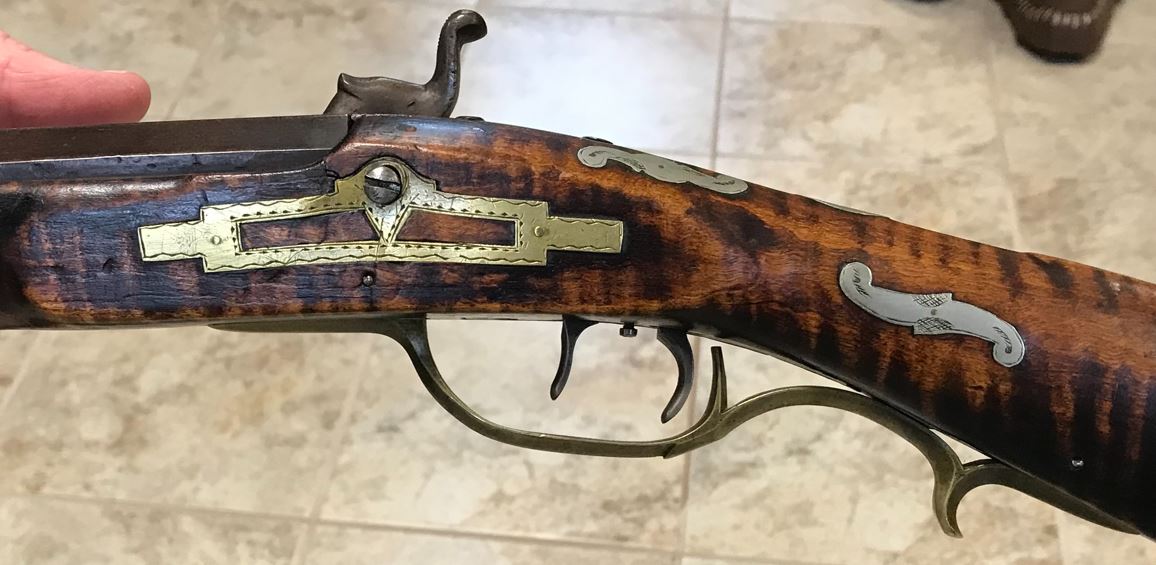
The next photograph focuses on the lock region of the Megahan long rifle. The percussion lock has an unengraved rounded tail lock plate, and may be a store-bought lock. The peripheral edge of the lock plate is unbeveled. The drum has wrench flats and a vent screw. All of the right-hand side of the trigger guard is visible in the photograph. Looking inside the bow, the rifle incorporates a double set trigger assembly with an adjustment screw. As is typical on Pennsylvania long rifles, the set trigger has more curvature than the hair trigger. The minimal percussion-cap-related damage to the wood and to the lock plate suggest that this rifle was seldom used for shooting. A silver inlay is visible on the upper surface of the stock, between the lock panel and the tang of the breech plug. As is typical on percussion arms, the hollowed-out nose of the percussion hammer telescopes over the nipple to protect the shooter's eyes from flying cap debris.
The following rifle picture is zoomed out a bit, to show both the buttstock and lock area of the Megahan muzzle loading percussion rifle. The lighting of this picture makes it easier to understand the shape of the stock panel for the lock, compared to the preceding picture.
In the following photograph, the camera view has panned to the right to show one of the decorative silver inlays on the fore-end of this ornate Pennsylvania long rifle. One of the cross-pins that secures the full octagon barrel to the stock is visible just forward of the decorative inlay. The surface of the gun lock plate appears to be flush, or nearly so, with the surrounding surface of the stock panel.
In the following image, the camera view has been panned farther to the right, showing the more of the forearm of the rifle. Barrel retention pins are visible to the right of both engraved decorative inlays. The rear sight is mounted over the ramrod entry pipe.
In the next picture, barrel retention pins are present to the right of each of the three silver inlays that are visible. The size of the forestock steps down significantly to match the size of the brass nose cap.
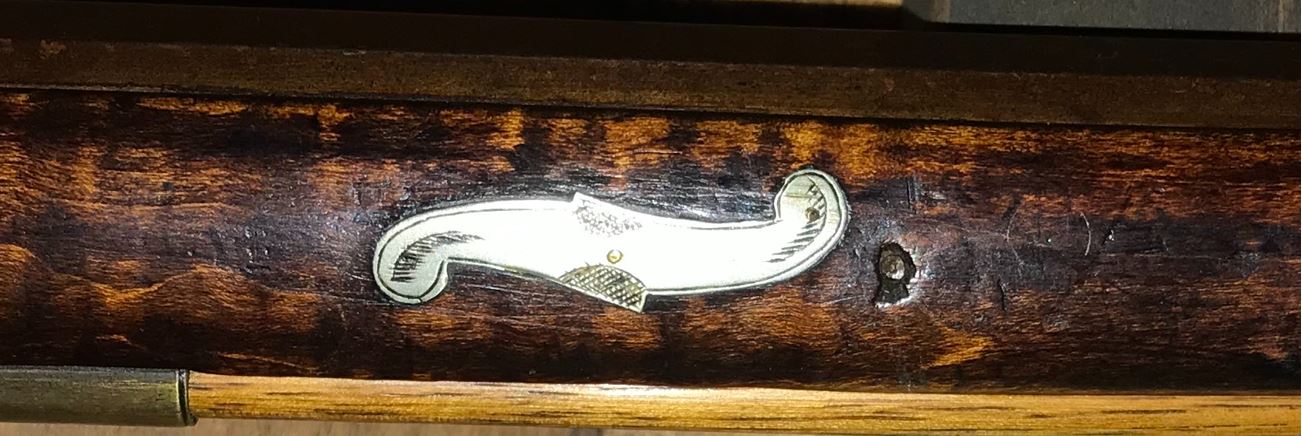
The following photograph provides an enlarged view of one of the decorative silver inlays on the right-hand side of the gun stock.
The next photo shows the entire left-hand side of this silver-inlaid antique rifle. The profusion of silver gun stock inlays would have made this rifle something of a status symbol for its owner.
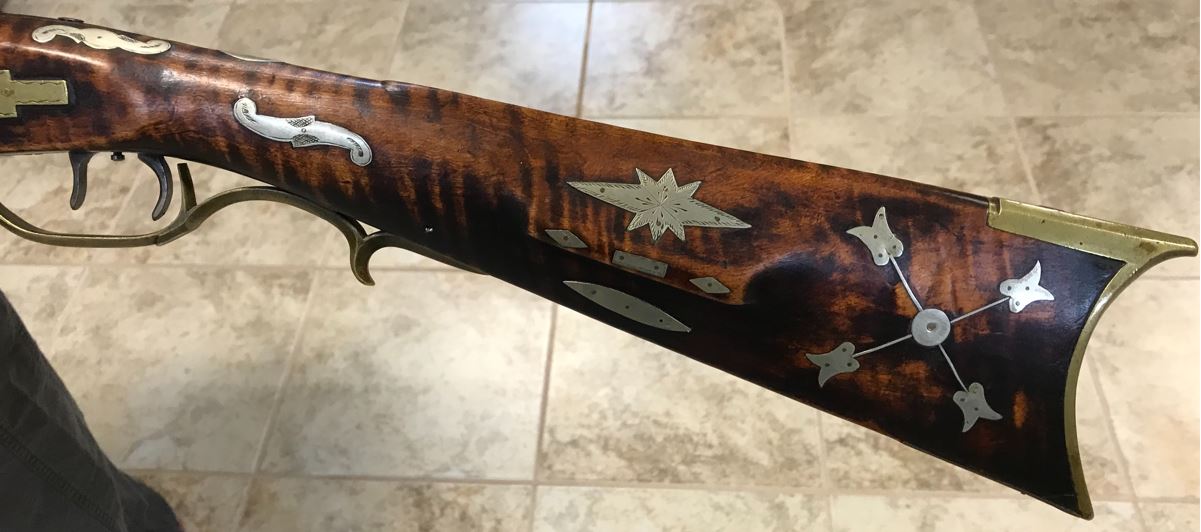
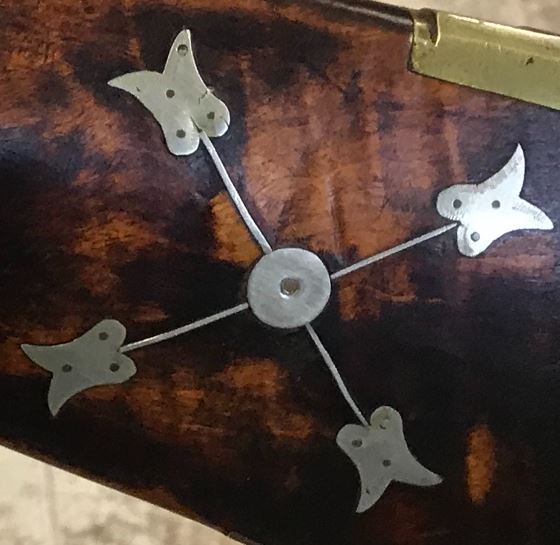
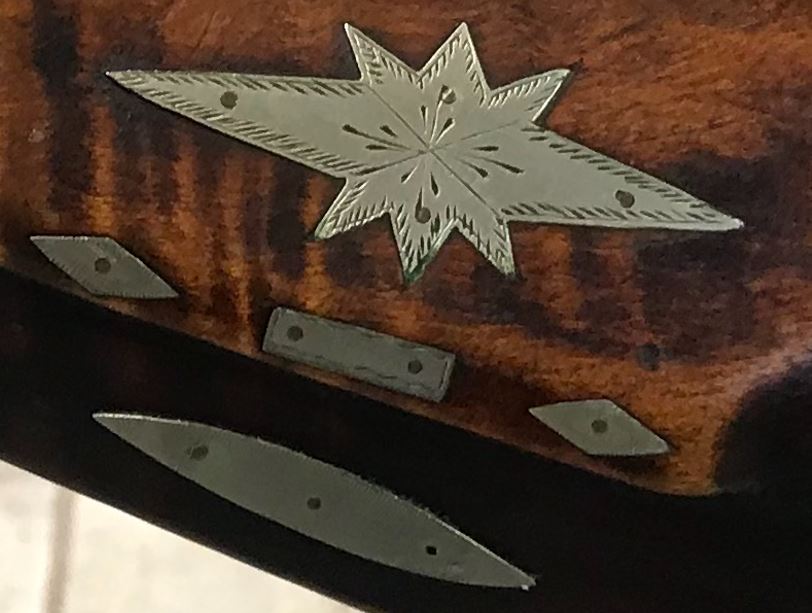
The following picture focuses on the cheekpiece side of the buttstock. The cheekpiece is decorated with an engraved eight-point silver star, two diamond-shaped silver inlays, and a rectangular silver inlay. A lanceolate-shaped inlay is located directly under the cheekpiece. A complex inlay with four radiating tulips is located to the rearward of the cheekpiece. The butt of the rifle is fitted with a cast brass crescent buttplate. A silver engraved wrist inlay is also present.
The following photograph is zoomed in on the radiating tulip inlay that is located between the cheekpiece and the crescent-shaped buttplate.
The next photograph provides an enlarged view of the silver inlays on and below the cheekpiece.
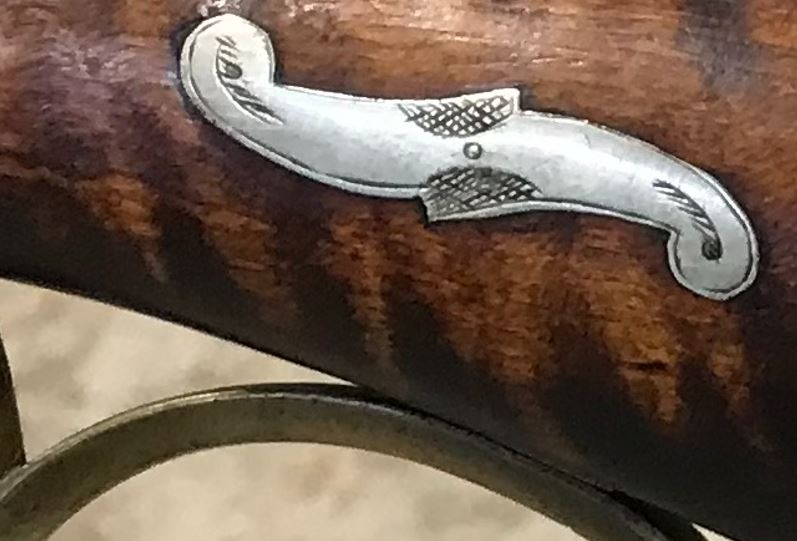
The following picture is an enlarged view of the wrist inlay on the left-hand side of this Megahan cap lock rifle.
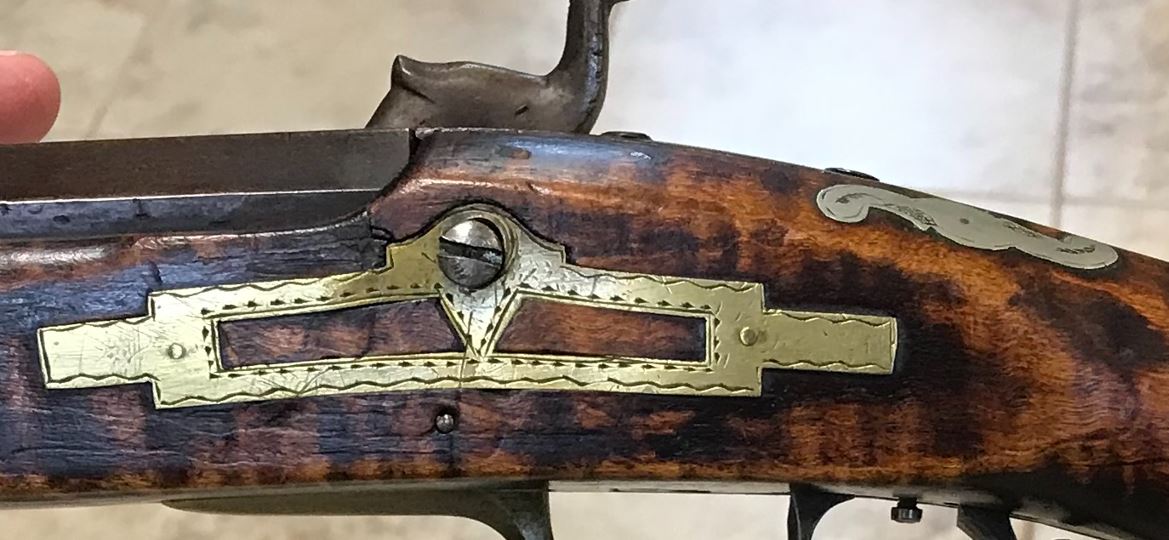
The next image features the engraved brass lock bolt plate and the mating panel of the rifle stock. The lock bolt plate incorporates two piercings. The lock is retained to the stock of this antique black powder rifle with a single threaded fastener.
The following image provides an enlarged view of the lock bolt plate of the Megahan rifle. The metal cross-pin that retains the forward part of the trigger guard to the gun stock is visible below the lock bolt plate. The lock bolt plate is flat (i.e. unbeveled) and is still secured to the stock by two brass nails when the lock screw is removed. A sliver inlay is visible in the area between the breech plug tang and the stock panel. The tang is secured with two screws, the heads of which can be seen in this view.
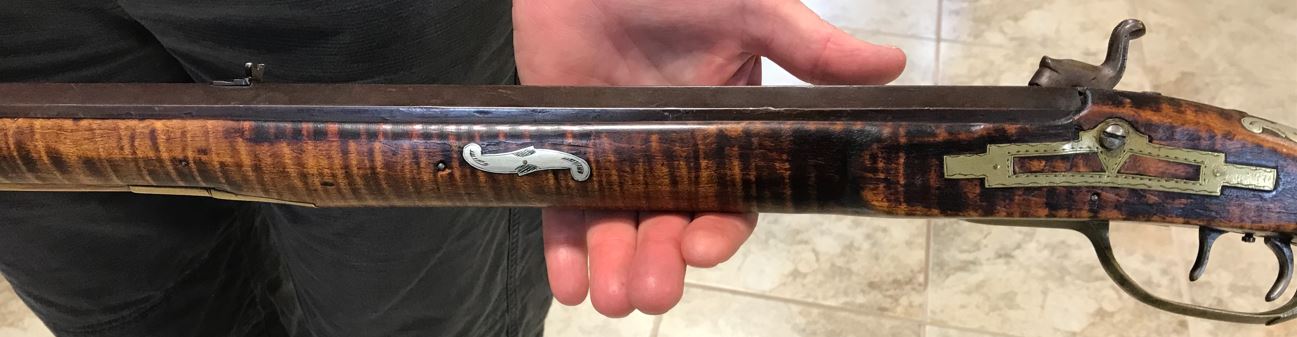
The next photo focuses on a portion of the left-hand side of the rifle from the lock bolt plate to the ramrod entry pipe. This view provides a good look at the curl of the maple stock.
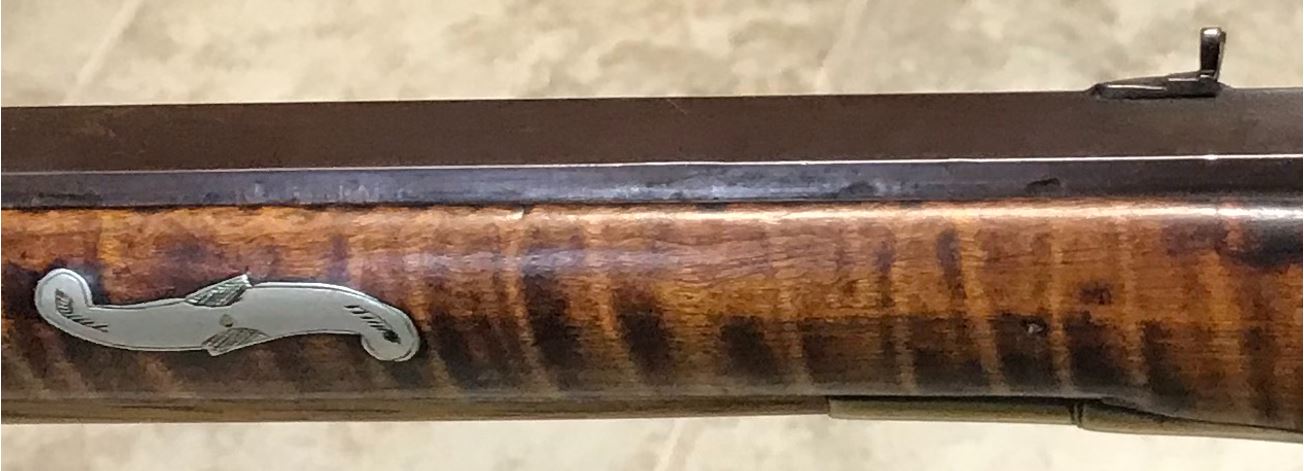
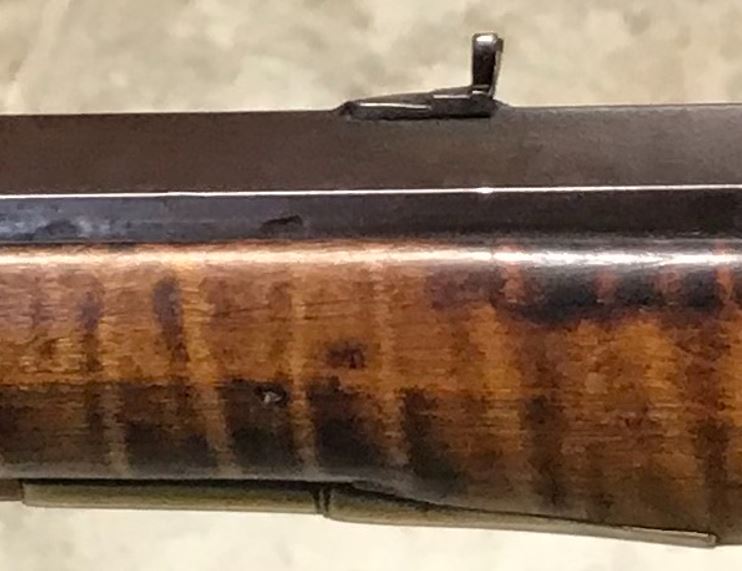
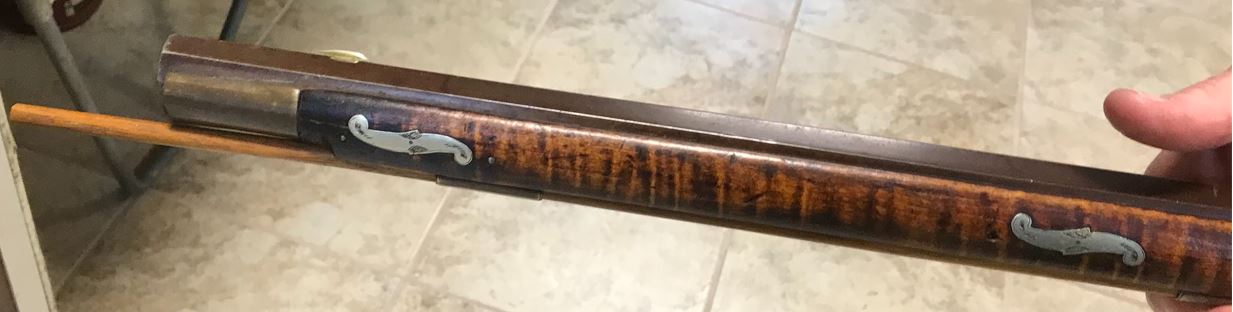
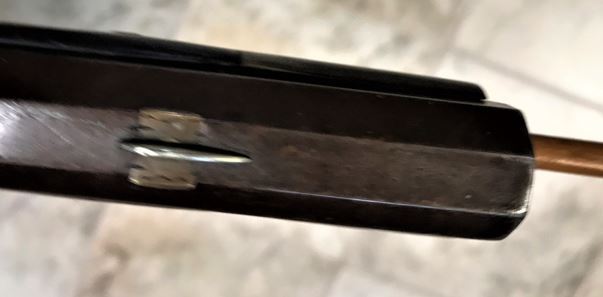
This picture provides a little closer view of the rear sight area of this antique muzzle loading rifle, and shows that the rear sight is dovetailed to the octagonal barrel.
This photo is zoomed in on the left-hand side of the rear sight, and also shows the left-hand side of the ramrod entry pipe. The stock steps down in size relatively abruptly at the entry pipe.
This view shows the rear two engraved silver inlays on the left-hand side of the forearm of this black powder firearm.
This view shows the front two silver inlays on the left-hand side of the forearm. The front sight and nosecap are also shown.
This is a somewhat out of focus top view of the front sight, which has an engraved brass base and a silver blade.
This side view of the forestock shows the height of the front sight, and the shape transition of the stock to match the shape of the nosecap. The stock is deeply grooved for the ramrod, but the nosecap is not. The metal cross-pin that retains the forward ramrod thimble to the stock can be seen above the center of the thimble.
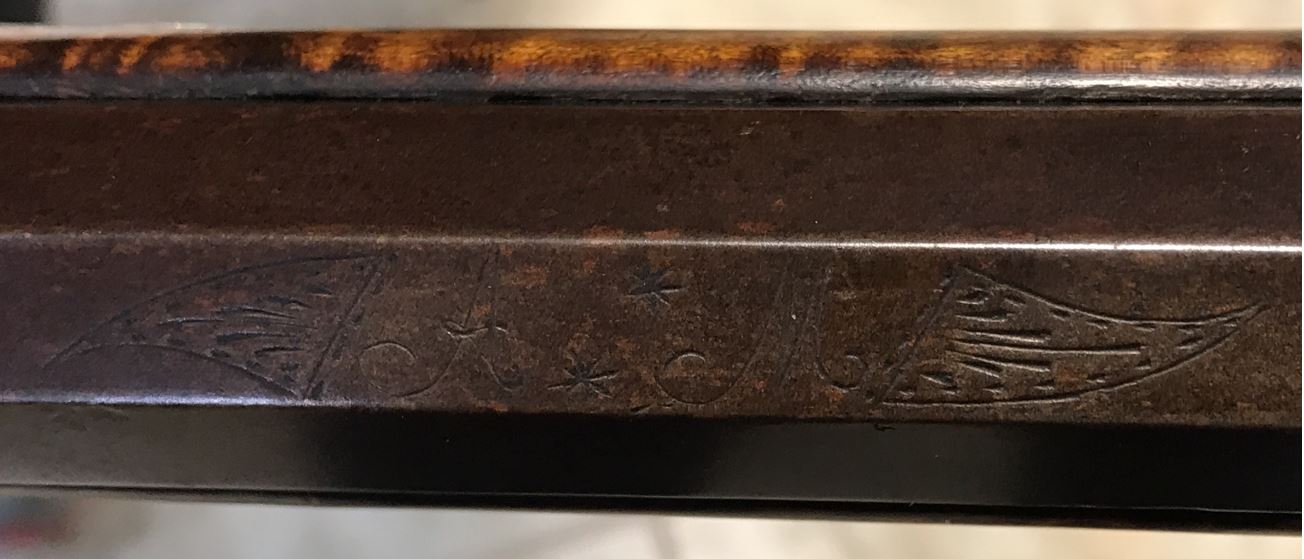
The next photo shows the engraved cursive initials "A M" on the upper flat of the barrel. The initials are separated by two astericks and flanked by engraved wing-like decorations.
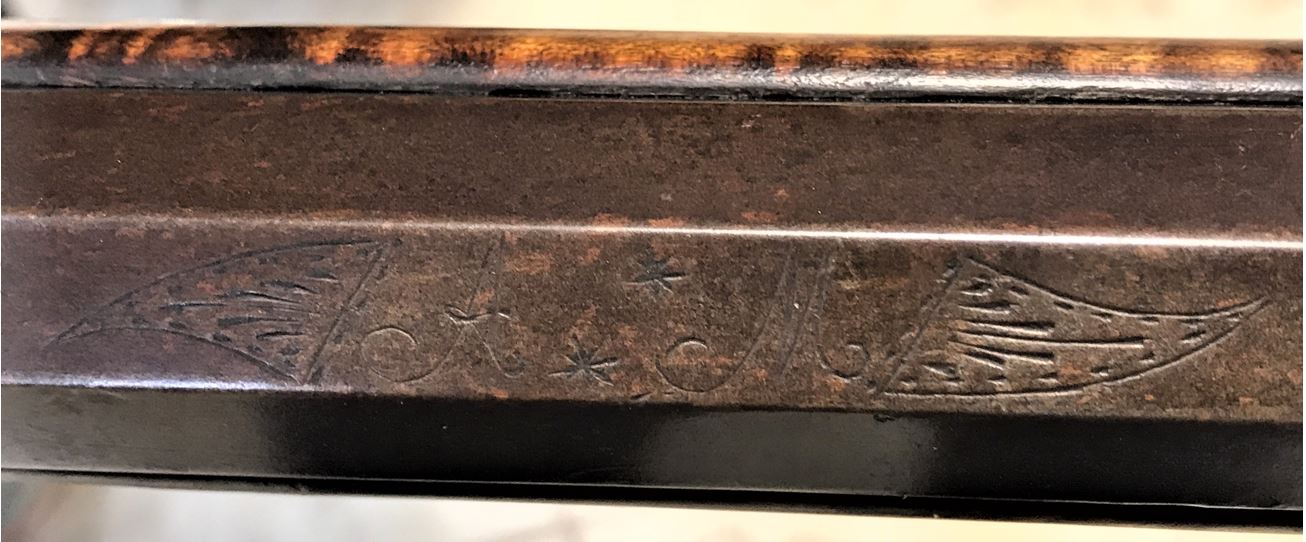
This photo of the barrel inscription uses a little different digital brightness adjustment than the previous one, and provides a glimpse of the fit between the barrel and the barrel channel of the stock.
Go to the Gunsmithing Index for additional Pennsylvania long rifle pictures and history.
Visit the home page for additional regional history.

The first image below provides a view of the entire right-hand of the rifle, which has a curly maple full-length stock with a relatively dark finish. This is the only photo I have that shows the presence and length of the toe plate.